
July 25, 2026
Cabinets in Washington DC: custom kitchen, bathroom, and built-in cabinetry (2026)
The complete guide to custom cabinets in Washington DC, kitchen cabinets, bathroom vanities, closets, and built-ins. Construction standards, materials, costs, and what separates a genuine custom cabinet from a catalog box in 2026.
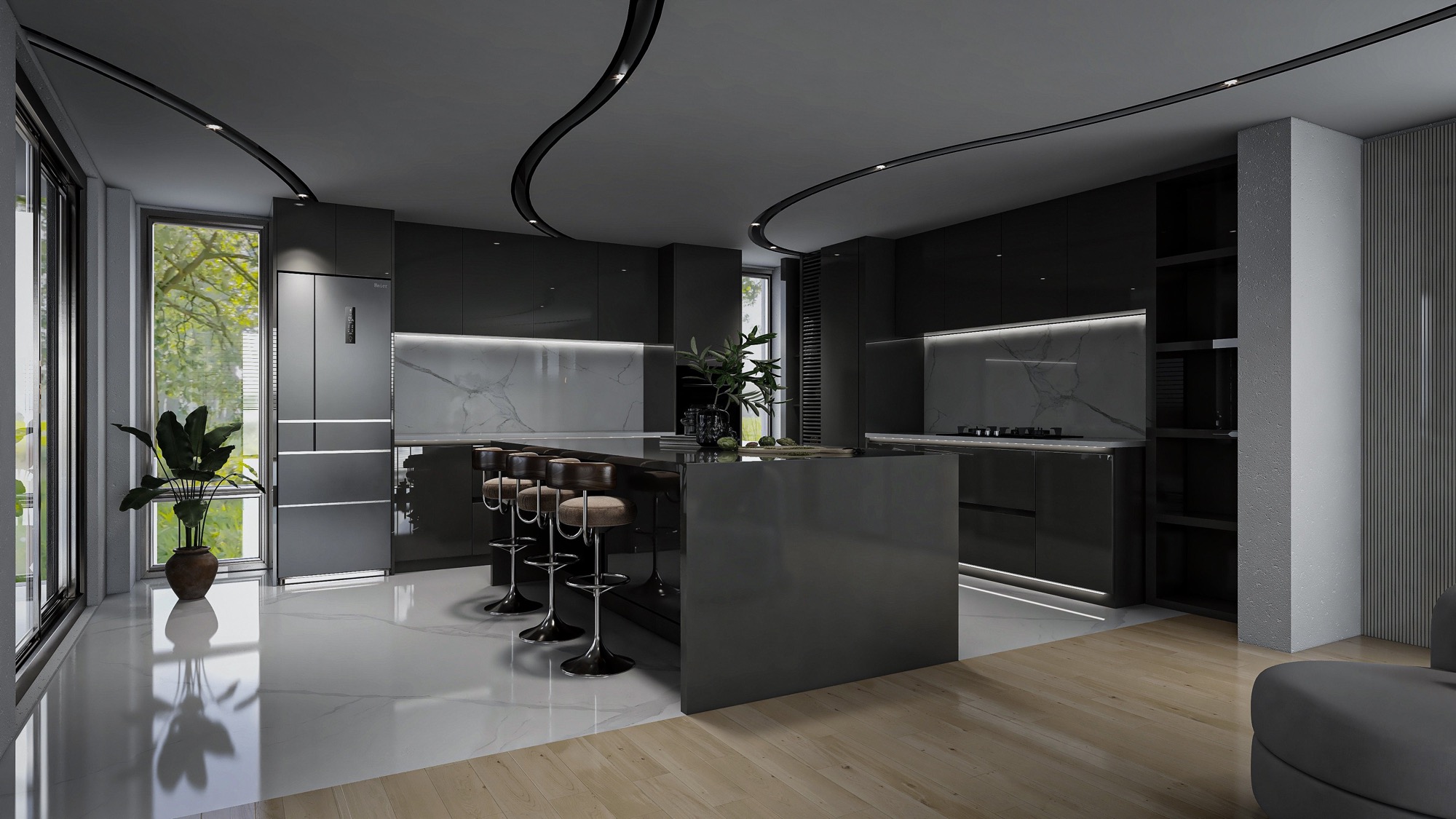
Custom cabinets are the largest single investment in most Washington DC home renovations: and the investment with the most variables. Cabinet quality ranges from factory-produced boxes that retail at $80 per linear foot to custom-fabricated programs at $800 per linear foot, with meaningful differences at every point along that range. The material, the construction method, the hardware, the finish, and the fabrication origin all affect how the cabinet performs over 20 years of daily use: and how the room looks the day it is installed.
In the DC market at $1M and above, the cabinet decision is not a budget conversation. It is a design and quality conversation: what construction standard is appropriate for the home, what finish suits the room and the household’s aesthetic direction, and what process produces the result the owner is planning for. This guide covers every dimension of that conversation: from the difference between frameless and face-frame construction to the cost of a full kitchen cabinet program in Georgetown, McLean, and Bethesda in 2026.
The Washington DC cabinet market
Washington DC’s residential renovation market for custom cabinets is concentrated in specific neighborhoods and price bands that reflect the area’s housing stock. Georgetown, Dupont Circle, Capitol Hill, and Logan Circle rowhouses make up the densest urban cabinet renovation market. McLean, Bethesda, Chevy Chase, and Arlington represent the suburban market: larger homes, larger kitchens, larger programs.
What these markets share is a client who has seen European kitchen design, who understands that the importing cabinet brands (Boffi, bulthaup, Siematic) represent a specific quality and aesthetic standard, and who is looking for a local alternative that matches that standard without the 12 to 16-week European import lead time. The DC custom cabinet market has developed to serve exactly this client: and the range of quality within the local custom category is as wide as the range between stock and import.
Pannello Home Interiors serves the DC metro area from a Georgetown showroom at 2201 Wisconsin Ave NW, Suite RO400: fabricating carcasses locally and delivering finished kitchen, bathroom, closet, and built-in programs in 3 to 5 weeks at the quality level the European import brands represent.
Types of custom cabinets in Washington DC
Kitchen cabinets
The kitchen cabinet program is the largest and most complex cabinet project in most DC homes. A full kitchen program includes base cabinets, upper cabinets, tall pantry units, and an island: ranging from 20 to 60 or more individual cabinet pieces in a primary kitchen renovation. The program must accommodate the appliance selection (refrigerator, dishwasher, range, microwave), the plumbing positions (sink, prep sink if present), and the kitchen’s specific dimensions and geometry.
Kitchen cabinets in a well-specified DC program are frameless European-style construction: carcasses in 18mm furniture-grade board, full-overlay doors, Blum soft-close hinges, and full-extension Blum drawer slides throughout. The door profile (slab, shaker, or beaded), the finish (matte lacquer, wood veneer, or Fenix NTM), and the interior organization (all-drawer base cabinets, pull-out pantry towers, specialized inserts) are specified during the design process.
The custom kitchen cabinets in Washington DC guide covers the kitchen program in full detail.
Bathroom vanity cabinets
The bathroom vanity is the second most common cabinet project in DC: and the one with the highest concentration of design decisions per square foot. A 60-inch double vanity is a small cabinet program in terms of linear footage but involves every dimension of the specification: carcass construction, door or drawer face design, finish material, hardware, sink configuration (undermount, vessel, or integrated), and countertop material.
DC primary bath vanities are specified in three primary finishes: matte lacquer (the most common), Fenix NTM (for steam shower-adjacent applications), and white oak veneer (for the warm material programs that pair with unlacquered brass and natural stone). Wall-hung vanities, the carcass mounted to the wall without floor contact, are the dominant specification in current DC bathroom programs: they read as lighter, they make cleaning the floor easier, and they suit the frameless European vocabulary.
Closet and wardrobe cabinets
Custom closets and wardrobe systems in DC use the same cabinet construction as the kitchen program (frameless carcasses, Blum hardware), adapted to a storage rather than cooking function. Walk-in closets in McLean and Bethesda primary suites, reach-in closets in Georgetown rowhouses, and wardrobe walls in Dupont Circle condos are all cabinet programs with specific internal configurations: hanging sections, drawer towers, shoe storage, and open shelving, drawn to the specific room and wardrobe.
Built-in cabinetry
Home office library walls, butler’s pantries, mudroom locker systems, and entertainment built-ins are cabinet programs in every functional sense (carcasses, doors, drawers, hardware), adapted to specific non-kitchen and non-bath functions. These programs use the same construction standards as the kitchen and bath programs and are designed to the specific room and use case.
Frameless versus face-frame: the construction decision that matters most
The most consequential construction decision in a cabinet program is whether the carcasses are frameless or face-frame. This is the decision that separates the European cabinet vocabulary from the American traditional vocabulary: and the decision that most affects how the cabinet functions over its lifetime.
Face-frame construction adds a solid wood frame to the front face of the cabinet box. The frame, typically 1.5 inches wide on each side, provides rigidity to the box but reduces the interior opening by 3 inches in each dimension. A 24-inch face-frame base cabinet has a 21-inch interior opening. Doors are typically inset (sitting within the frame opening) or half-overlay (covering half the frame on each side).
Frameless construction uses no face frame: the door or drawer face covers the full face of the cabinet box, and the interior is the full dimension of the box. A 24-inch frameless base cabinet has a 24-inch interior opening. Every drawer or door uses a full-overlay mount, providing the clean flush surface associated with European design.
The practical difference accumulates in a kitchen with 20 to 40 base cabinet drawers: frameless provides several hundred cubic inches more usable storage than face-frame at the same cabinet footprint. The aesthetic difference is equally significant: the frameless kitchen reads as contemporary and architectural; the face-frame kitchen reads as traditional.
All Pannello cabinet programs use frameless construction. This is the construction standard for the European import brands the DC market respects, and it is the correct standard for the kitchen programs and bathroom vanities Pannello produces.
Cabinet materials: carcass, door, and finish
Carcass material
The carcass is the structural box of the cabinet: the sides, top, bottom, and back panels that form the container. Carcass material quality is the least visible dimension of a cabinet program and the most consequential for long-term performance.
18mm furniture-grade board (Pannello standard): Denser and thicker than the 15 to 16mm board used in catalog programs. Provides a stiffer box, more secure hardware mounting, and a carcass that does not deflect or deform under sustained load. Hinge and drawer slide screws hold more reliably in 18mm board than in thinner material.
15–16mm particleboard (catalog standard): Adequate for the first 5 to 10 years of use but becomes the failure point in older kitchens. Hinges loosen, drawer slides develop play, and the box itself begins to sag under sustained load. Most kitchen cabinet replacements in DC are removing 15 to 16mm carcasses that were installed 15 to 20 years ago.
Moisture-resistant specification: For bathroom vanities and mudroom programs, any cabinet adjacent to plumbing or exposed to humidity cycling, Pannello uses moisture-resistant substrate throughout. Standard particleboard absorbs moisture at the cut edges and degrades; moisture-resistant board maintains its structural integrity.
Door and drawer face materials
The door face is the visible surface of the cabinet and the primary design decision. The major categories:
Slab (flat-panel): A single flat panel with no profile or ornamentation. The current standard specification for European-style kitchens in DC. Available in any finish material. Reads as contemporary and architectural.
Shaker: A five-piece door with a recessed center panel, rail, and stile. The most common transitional profile in the DC market: suits traditional and contemporary kitchens. Available in painted or veneer.
Beaded inset: A face-frame-based door style with a bead detail on the inner edge of the frame. Traditional vocabulary, appropriate in homes with existing period millwork. Less common in current Pannello programs.
Cabinet finishes
Matte lacquer (2K polyurethane): The Pannello standard finish for kitchen and bathroom programs. Applied in the shop in controlled conditions, cured for 7 days before delivery. Harder, more durable, and more moisture-resistant than single-component lacquer or paint. Available in any color; standard specifications include warm whites, soft grays, deep navies, and forest greens.
Fenix NTM: A nano-technology laminate surface with an ultra-matte finish that is fingerprint-resistant and self-healing for minor scratches. Specified most commonly for primary bath vanities adjacent to steam showers. Available in a limited palette of neutral and dark tones.
White oak veneer (rift-cut): Real wood veneer over a furniture-grade substrate, finished with 2K polyurethane topcoat. The warm natural material of the designed DC kitchen program in 2026: visible grain, warm color, material depth that no lacquer or laminate can replicate. Requires more care than lacquer; incorrect cleaning products damage the finish.
Cabinet hardware: the daily-use component
Every Pannello cabinet program specifies Blum hardware throughout: for drawer slides, hinges, and interior pull-out mechanisms. This is not an upgrade option; it is the standard, because hardware is the most-used component in a cabinet and the component most responsible for how the cabinet functions over time.
Blum Tandem full-extension undermount drawer slides: Open to the full depth of the drawer, load-rated to 130 lbs, Blumotion soft-close damping built in. 500,000 cycle rated. A kitchen drawer opened five times a day for 20 years completes approximately 36,500 cycles: well within the rated lifespan.
Blum Clip-Top hinges with Blumotion: Self-closing soft-close hinges with clip-on mounting for easy door adjustment. 200,000 cycle rated. The hinge is the most-used hardware in the kitchen; a lower cabinet door opened ten times a day completes 73,000 cycles in 20 years.
The visible hardware (pulls, knobs, and handles) is the design choice the client makes during the specification review. The cabinet hardware guide covers finish selection, sizing, and pairing in detail.
Custom vs semi-custom vs stock: a direct comparison
| Stock (IKEA, Home Depot) | Semi-custom (KraftMaid, Merillat) | Custom (Pannello) | |
|---|---|---|---|
| Carcass thickness | 15–16mm particleboard | 15–18mm | 18mm furniture-grade |
| Construction | Face-frame or basic frameless | Face-frame | Frameless European |
| Drawer slides | Basic undermount or side-mount | Undermount soft-close | Blum Tandem full-extension |
| Hinges | Entry-level soft-close | Soft-close | Blum Clip-Top Blumotion |
| Finish | Foil laminate or thermofoil | Painted or stained wood | 2K lacquer, Fenix, or veneer |
| Dimensions | Fixed module sizes | Limited customization | Exact room dimensions |
| Interior organization | Generic | Some options | Fully specified |
| Lead time | 1–4 weeks | 6–10 weeks | 3–5 weeks (local fab) |
| Lifespan | 8–12 years | 12–18 years | 20+ years |
| Price per linear foot | $80–$200 | $200–$500 | $500–$1,200+ |
The price gap between stock and custom is real. The performance gap over 10 to 20 years of daily use is larger. A McLean kitchen with Pannello cabinetry installed in 2026 should still operate correctly (drawers smooth, doors closing flush, finishes intact), in 2046. The same kitchen with stock cabinetry will need replacement in the mid-2030s.
What cabinets cost in Washington DC (2026)
Per linear foot: Custom Pannello cabinet programs run $500 to $1,200 per linear foot installed, depending on finish material (veneer is at the top of the range), interior organization specification, and program complexity. This figure covers the cabinet program only: countertops, appliances, tile, and electrical are separate line items.
DC neighborhoods: what each market specifies
Georgetown ($1.5M–$5M homes): Matte white lacquer is the dominant finish in Georgetown kitchen and bath programs: it suits the Federal and Victorian architecture and photographs correctly in tight rowhouse rooms. Wood veneer is specified in formal dining room built-ins and home office library walls where the material warmth is appropriate. Island programs are limited by rowhouse kitchen dimensions; peninsula or wall-mounted solutions are common alternatives.
McLean and Great Falls ($2M–$8M homes): The largest and most complex cabinet programs in the DC metro market. White oak veneer kitchen programs with quartzite islands, full-height dark lacquer estate kitchens, and butler’s pantry programs that function as dedicated catering kitchens. McLean clients specify the full Blum interior organization (Legrabox pull-outs, Orga-Line inserts, magic corner systems), as standard, not as an upgrade.
Bethesda and Chevy Chase ($1.5M–$4M homes): The highest-volume custom cabinet market in the metro area by number of projects. Colonial kitchen renovations with island additions are the core program. Two-tone programs (white perimeter with dark island) are the most common specification. Butler’s pantry integration is increasingly common in programs at $3M and above.
Dupont Circle and Logan Circle ($1M–$3M rowhouses and condos): Tight kitchen programs where the cabinet design resolves complex geometry: galley conversions, window-adjacent upper cabinets, peninsula alternatives to islands. Bathroom vanity programs are significant: Dupont and Logan Circle primary baths receive more cabinet design attention per square foot than any other market segment.
Arlington ($800k–$2.5M townhomes and colonials): A growing market for custom cabinet programs as the housing stock ages and renovation cycles. Garage-entry mudroom programs are disproportionately common relative to other DC neighborhoods: Arlington’s townhome stock creates a specific demand for ground-floor mudroom built-ins. Kitchen programs are typically mid-size (180 to 260 sq ft) with one previous renovation that is now due for replacement.
The Pannello showroom and process
The Pannello Georgetown showroom at 2201 Wisconsin Ave NW carries the full finish library in full-size door samples: not 4-inch chip samples from a binder. A client reviewing the difference between matte lacquer and Fenix NTM, or between rift-cut and flat-cut white oak veneer, does so against actual door samples in the showroom lighting, against actual countertop samples, and with actual hardware options pulled for the comparison.
You can find Pannello on Google Maps: the listing includes photographs of completed kitchen, bathroom, and built-in programs from DC metro clients, showroom hours, and verified client reviews from Georgetown, McLean, Bethesda, and Arlington projects.
Showroom hours: Monday–Friday 9am–6pm, Saturday 10am–4pm.
The process from first consultation to installed cabinets:
Every project begins with a 60 to 90-minute showroom consultation: no charge. We review the room (photographs if the first visit is remote, the actual space if local), walk the finish samples, and discuss the design direction and functional program. Within 7 days of a site measure, Pannello delivers full elevation drawings of every wall in the program. Within 7 days of the specification approval, fabrication begins. Kitchen programs deliver in 3 to 5 weeks; bathroom vanities and smaller built-in programs in 2 to 3 weeks. Installation is performed by Pannello’s in-house crew: the same people who designed and fabricated the program.
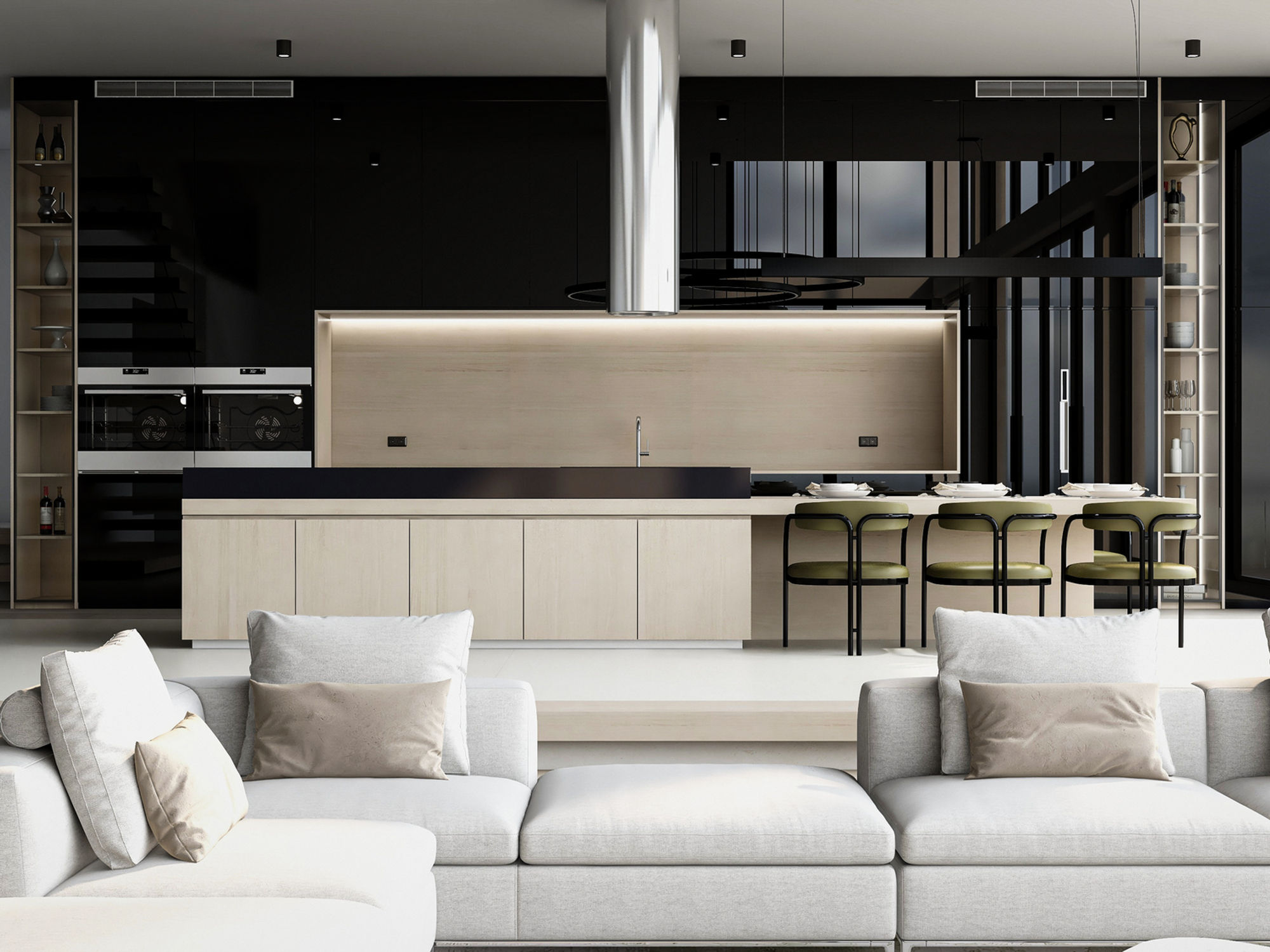
European cabinet standards in a DC context
The European import kitchen brands (Boffi, bulthaup, Siematic, Varenna), define the quality ceiling for the DC cabinet market and have done so for 30 years. Their influence on the local custom market is direct: DC interior designers who specify these brands set the material and construction standard that local fabricators are measured against.
The specific standards the European brands established, and that Pannello matches:
Frameless (full-access) construction: All European kitchen programs are frameless. The DC custom market adopted this standard in the 1990s and it is now universal in quality programs at this price point.
18mm or greater carcass board: European kitchen carcasses are 18mm or 19mm furniture-grade board as standard. The 15mm and 16mm board in entry and mid-market American programs is not an accepted specification in the European vocabulary.
Full-extension drawer slides with integrated soft-close: Blum, Grass, and Hettich are the three European hardware manufacturers whose slides are specified across the European brand range. Blum is the most commonly specified in the DC market. Full extension (the drawer opens to its full depth), integrated soft-close damping (not added on as a separate damper), and 130+ lb load rating are the standard.
Shop-applied finish: European cabinets are finished in the factory in controlled conditions: not painted on site. A factory-applied 2K polyurethane or catalyzed lacquer finish is harder, more consistent, and more durable than a site-applied brush or roller finish. Pannello applies all finishes in the DC-area shop before delivery.
Precision to ±1mm: European cabinet programs are fabricated and assembled to dimensional tolerances of ±1mm. In a kitchen with 40 panels and 60 drawers, this tolerance accumulates to a program that fits the room exactly and aligns precisely. Catalog programs built to ±3mm tolerances produce kitchens with visible gaps between panels, uneven reveals, and drawers that require shimming to align.
The European brands achieve these standards at 12 to 16-week lead times from European factories. Pannello achieves the same standards at 3 to 5-week lead times from a DC-area shop. The material source (the board, the hardware, the finish components) is the same European supply chain. The fabrication happens locally.
Cabinets for interior designers and architects
Pannello works on a trade basis with DC-area interior designers and architects on cabinet programs across all categories: kitchen, bath, closet, and built-in. The trade process is designed to integrate with the designer’s workflow: shop drawings in PDF and DWG format delivered within 7 days of site measure, finish samples delivered to the design studio, 3D visualization for client presentation, and installation scheduling coordinated with the general contractor’s program.
For designers specifying a kitchen or bath program where the cabinet is one component of a larger room renovation: Pannello designs the cabinet program within the room’s finish language (respecting the paint selections, the tile choices, and the hardware decisions the designer is making), rather than imposing a separate design vocabulary. The cabinet program and the room’s other finishes are resolved together at the specification stage.
For architects specifying built-in programs in new construction or major renovations: Pannello accepts shop drawing sets and specification documents from the architectural team and builds to the specification. We provide RFI responses, submittals, and closeout documentation appropriate to the project requirements.
Frequently asked questions
What is the best cabinet brand in Washington DC?
The best custom cabinet programs in Washington DC are produced by local fabricators, not imported brands, because local fabrication provides faster lead times, direct access to the fabricator for design questions, and the ability to visit the shop during production. Pannello fabricates in the DC metro area from a Georgetown showroom, delivering programs in 3 to 5 weeks at the construction and finish standards of the European import brands that DC designers specify.
How much do custom kitchen cabinets cost in Washington DC?
Custom kitchen cabinets in Washington DC run $28,000 to $55,000 for a Georgetown rowhouse kitchen (cabinet program only, without countertops or appliances), $38,000 to $75,000 for a Bethesda or Arlington colonial kitchen, and $55,000 to $100,000 or more for a McLean estate kitchen. Bathroom vanities run $4,000 to $14,000. Built-in programs run $8,000 to $40,000 depending on scope.
What is the difference between custom and semi-custom cabinets?
Semi-custom cabinets are manufactured in fixed module sizes with limited finish options, produced in a factory and modified slightly for the specific room. Custom cabinets are fabricated to the exact dimensions of the room, in the specific finish and door profile specified, with interior organization drawn to the household’s use case. The construction standard (carcass thickness, hardware, finish material) is typically higher in a genuine custom program than in semi-custom.
How long do custom cabinets last?
A Pannello cabinet program (18mm furniture-grade carcasses, Blum hardware, 2K polyurethane finish) has a design lifespan of 20+ years in a properly maintained residential environment. The limiting component is typically the finish, which can be refinished without replacing the carcass. The hardware is rated for 200,000 to 500,000 cycles: well beyond any realistic residential use scenario.
How long does a cabinet program take?
From signed specification, Pannello delivers kitchen programs in 3 to 5 weeks and bathroom vanities and built-ins in 2 to 3 weeks. Installation is 1 to 8 days depending on program scope. This is significantly faster than European import brands (12 to 16 weeks) and comparable to semi-custom programs that arrive in modular boxes requiring significant site assembly.
Does Pannello serve Northern Virginia?
Yes. Pannello serves the full DC metro area including McLean, Great Falls, Vienna, Reston, and Arlington in Northern Virginia, and Bethesda, Chevy Chase, Rockville, and Potomac in Maryland. The Georgetown showroom is accessible from Northern Virginia via Chain Bridge or Key Bridge in 15 to 25 minutes depending on traffic.
Can I see Pannello’s completed projects before scheduling a consultation?
Yes. The Pannello Google Business Profile includes photographs of completed kitchen, bathroom, closet, and built-in programs from DC metro projects. The showroom at 2201 Wisconsin Ave NW also displays full-size door and material samples and can arrange reference visits to completed projects with client permission.
Schedule a design consultation at the Georgetown showroom: 2201 Wisconsin Ave NW, Suite RO400, Washington DC 20007. Open Monday–Friday 9am–6pm, Saturday 10am–4pm.
Related reading: Custom kitchen cabinets in Washington DC, 2026 guide · Custom bathroom vanities in Washington DC, 2026 guide · Custom closets in Washington DC, 2026 guide · Kitchen renovation in Bethesda, 2026 guide · Kitchen renovation in McLean, 2026 guide.