
September 21, 2026
Custom cabinet makers in Washington DC: how to choose, what to expect, and what it costs (2026)
A practical guide to finding and working with custom cabinet makers in Washington DC — the difference between custom, semi-custom, and stock, how local makers operate, what the process looks like, and what custom cabinets cost in DC in 2026.
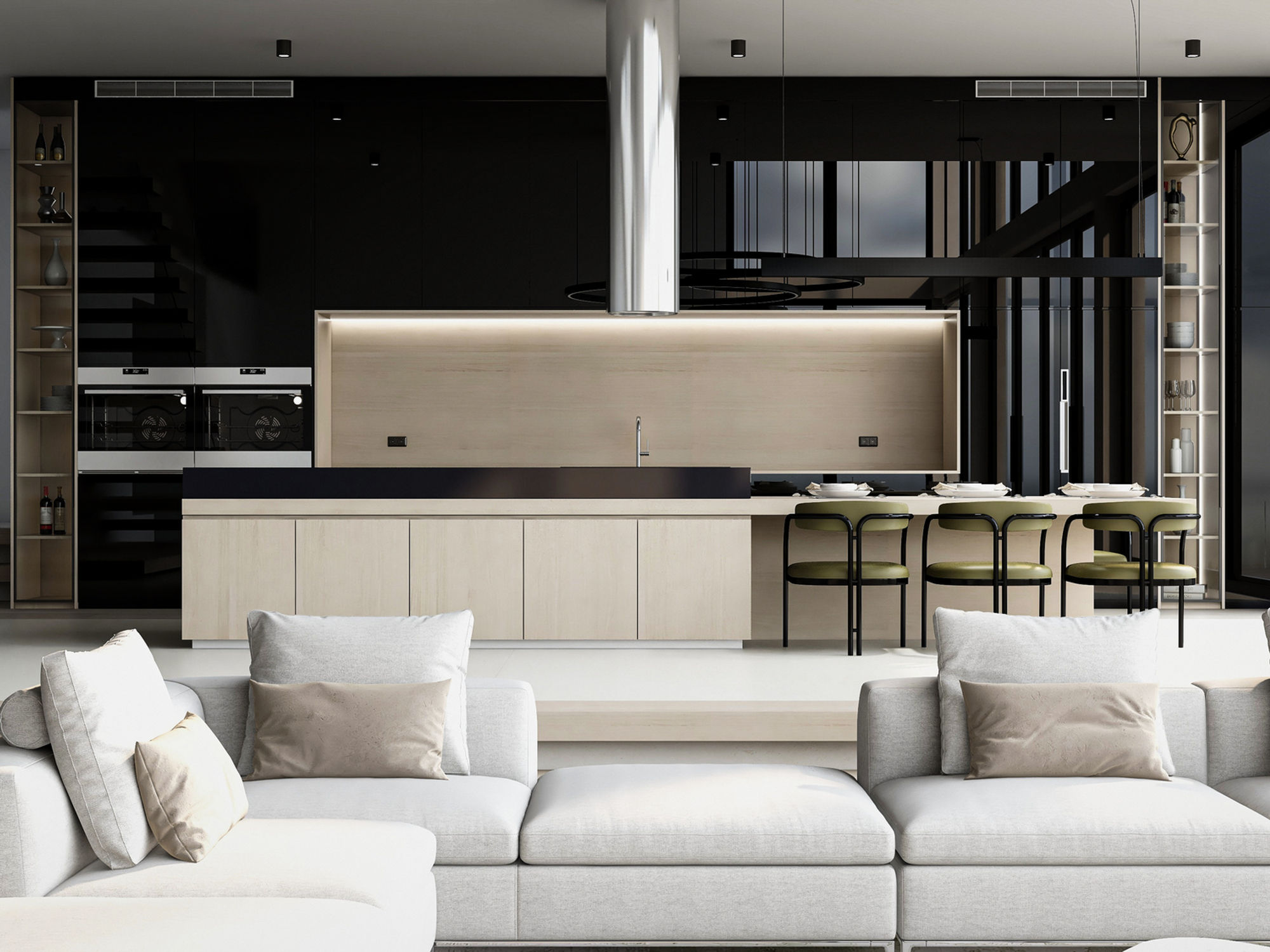
The term “custom cabinets” is used loosely in the DC renovation market to describe anything from a box-store kitchen reconfigured with pull-out shelves to a fully bespoke set of frameless cabinets fabricated specifically for a Georgetown rowhouse at a local shop. The difference matters — not just in price, but in the type of relationship you have with the maker, the degree of design collaboration you can expect, the lead time you’re working with, and the quality of the result.
Washington DC’s renovation market has three distinct tiers of cabinet supply: stock cabinets (pre-built in fixed sizes, available at big-box stores), semi-custom cabinets (factory-built to a wider range of sizes and finishes, ordered through kitchen dealers), and fully custom cabinets (fabricated specifically for your project, to your specifications, by a local maker or a regional shop). Understanding which tier is appropriate for a given project — and how to find and work with the right maker for that tier — is the foundation of a successful kitchen or bathroom renovation in DC.
This guide covers how the three tiers differ in practice, what to look for in a DC custom cabinet maker, how the design and production process works, what the timeline looks like for a DC renovation, and what custom cabinets actually cost in DC in 2026.
Stock, semi-custom, and custom: what the terms actually mean
Stock cabinets are produced in fixed dimensions (typically 3-inch increments from 9 to 48 inches wide) and stocked in distribution centers for immediate availability. A stock kitchen cabinet program from a big-box store can be purchased in a single day and delivered within a week. The trade-off is that the cabinet is built to a fixed dimension and the design vocabulary is limited to whatever the manufacturer offers. Filler strips and trim pieces are used to fill the gaps between standard-size cabinets and your actual wall dimensions. Stock cabinet programs cost $150 to $500 per linear foot installed in DC.
Semi-custom cabinets are produced in a wider range of sizes (typically 1-inch increments) and finishes by factories that sell through kitchen dealers and designers. The cabinet is still factory-built, but it is built to your size specifications within the manufacturer’s range, and the finish options are significantly broader — painted, stained, glazed, specialty finishes in the manufacturer’s catalogue. Semi-custom programs have lead times of 8 to 14 weeks from order to delivery. Most of the national kitchen brands sold through DC showrooms — Medallion, KraftMaid, Wellborn, Wood-Mode — are semi-custom. Cost: $400 to $900 per linear foot installed in DC.
Fully custom cabinets are fabricated specifically for your project by a local or regional maker, to your specifications for dimension, material, finish, and construction detail. There is no catalogue to select from — the cabinets are designed as part of the project, and every dimension can be optimized for your space. The maker may use CNC machinery for parts production but the cabinet itself is not a factory product. Fully custom cabinets from a DC-area maker have lead times of 3 to 8 weeks from design approval to delivery. Cost: $800 to $2,000+ per linear foot installed in DC, depending on material, finish complexity, and specification.
The distinction between semi-custom and custom is not always clearly drawn by sellers. Many DC kitchen dealers describe their semi-custom factory products as “custom” because they are built to specification within the factory’s range. A useful test: if the cabinet is made by a named national manufacturer and ordered through a showroom, it is semi-custom. If the cabinet is fabricated at a local or regional shop specifically for your project, with no catalogue constraints on dimension or construction, it is custom.
What custom cabinet makers in DC actually do
A local custom cabinet maker designs and fabricates cabinets in a shop environment, either CNC-assisted or hand-built depending on the operation’s scale and philosophy. The core of the offering is not the machinery — it is the design and fabrication relationship. A custom maker is a collaborator, not a supplier.
What this means in practice for a DC homeowner:
Design to your space, not a catalogue. A custom maker begins with your actual room dimensions — the floor plan, the ceiling height, the window and door positions, the plumbing rough-in locations, the column or beam intrusions that a stock program would work around with filler strips. The cabinets are designed to fill the space fully and correctly, with no fillers except where a deliberate reveal is part of the design intent.
Specification control. You can specify the cabinet box material (plywood vs MDF vs solid wood), the door style (flat panel, recessed panel, shaker, bead-frame, custom profile), the finish (paint, stain, lacquer, Fenix NTM, wood veneer), the drawer box construction (dovetail vs rabbet vs metal), the hardware (hinge brand, soft-close spec, drawer glide specification), the interior organization (pull-outs, pegs, inserts), and the edge detail. A semi-custom factory has a catalogue of choices; a custom maker has only your project brief.
Iterative design. A custom maker can revise the design through multiple rounds before anything is produced. A semi-custom factory order is typically final at the point of submission — changes after order placement are expensive and sometimes impossible.
Local accountability. A custom maker in the DC area is accessible during and after the project. If a door panel is damaged in installation, a drawer box needs adjustment, or a finish question arises two years after the project, the maker is reachable. A factory product from an out-of-state manufacturer is serviced through the dealer, with lead times for replacement parts.
How to find a custom cabinet maker in Washington DC
The DC market has a range of custom and semi-custom cabinet suppliers, from local custom shops to national dealers with DC showrooms. Finding the right maker requires distinguishing between them.
Ask specifically whether the cabinets are fabricated locally. A DC showroom may sell semi-custom factory cabinets branded with the showroom’s name — the showroom handles the design and the installation, but the cabinet is produced at a factory in another state. There is nothing wrong with this model, but it is different from a local maker who fabricates the cabinet in the DC area.
Ask about lead time. A fully custom local maker typically has a lead time of 3 to 8 weeks from design approval to delivery. A semi-custom factory program is typically 8 to 14 weeks. If a showroom quotes 6 weeks for a kitchen in the first conversation without seeing your project, that number should be verified — it may be an optimistic estimate for a semi-custom program, or it may be accurate for a local maker with current capacity.
Ask to see photographs of completed DC projects. A custom maker who works primarily in DC will have a portfolio of completed projects in DC houses — Georgetown rowhouses, Capitol Hill colonials, McLean primaries. The photographs should reflect the design constraints and finishes that appear in DC renovations. A portfolio of cookie-cutter white shaker kitchens photographed in suburban tract houses is not evidence of experience with DC’s varied housing stock.
Ask how the design collaboration works. A genuine custom maker will describe a process that begins with a site visit, produces detailed CAD or rendering drawings for your review, and involves multiple revision rounds before production begins. A semi-custom dealer’s process is more constrained — the design is done within the factory’s system, and the output is an order form, not a bespoke set of drawings.
Ask about finish options beyond paint and stain. The DC luxury market specifies finishes that are not available from most semi-custom factories: Fenix NTM laminate, 2K polyurethane lacquer in custom colours, European wood veneer (rift-cut white oak, fumed oak, walnut), fluted wood profiles, brushed metal fronts. A custom maker who works in this market will have direct experience with these finishes and can show installed examples.
Custom cabinet cost — Washington DC, 2026
The custom cabinet process at a DC shop: from first call to installation
Site visit and brief
The first step with a genuine custom maker is a site visit. The maker or a designer measures the space in full: floor dimensions, ceiling height, window and door positions, plumbing and electrical rough-in locations, and any architectural features (columns, beams, soffits, chimneys) that will affect the cabinet layout. A site visit takes 60 to 90 minutes for a kitchen; less for a bathroom or closet program.
The site visit is also a design conversation. What are you replacing? What is working and not working about the current space? What is the design direction? What materials and finishes are you considering? What is the program — the activities and storage needs the new cabinets must serve? A maker who arrives, measures, and leaves without a substantive design conversation is not a design-build partner; they are a box supplier.
Design development
After the site visit, the maker produces a preliminary design — typically a floor plan and elevations showing the cabinet layout, proportions, and basic specification. For a kitchen, this includes the work triangle or work zone layout, the upper and lower cabinet configuration, the island or peninsula design if any, the appliance integration, and the basic finish direction.
The preliminary design is reviewed with you and revised until the layout and specification are agreed. For a complex kitchen program, this process may take two to four review rounds. For a simpler bathroom or closet program, one or two rounds is typical.
The design development phase ends with a design approval — a final set of drawings and a specification document that the maker will produce from. This approval is the point at which the project moves to production.
Production
Custom cabinet production for a DC kitchen typically takes 3 to 6 weeks from design approval. The production sequence is: cabinet box construction (typically 3/4-inch cabinet-grade plywood, edge-banded or painted), door and drawer front production (routed, sanded, and primed separately), finish application (spray lacquer, Fenix lamination, or veneer pressing in a controlled environment), hardware installation, and final quality check.
A critical difference between a local maker and a factory program: the local maker produces your cabinets as a single project run, and quality control is applied to your specific set of cabinets. A factory program produces your cabinets alongside many other orders, and quality control is statistical — most cabinets meet specification, and outliers are resolved through warranty replacement after delivery.
Delivery and installation
Custom cabinet installation in a DC kitchen typically takes 3 to 5 days for a standard kitchen, 1 to 2 days for a bathroom vanity program, and 2 to 4 days for a full closet system. The installation team sets the base cabinets first, checks level and plumb, scribes to the floor and wall irregularities, then sets the upper cabinets, installs the doors and drawer fronts, adjusts hardware, and performs a final punch walk.
In a DC rowhouse with plaster walls and unlevel floors (common in pre-war Georgetown and Capitol Hill houses), the scribing and leveling process is more involved than in a newer construction with flat drywall and level floors. A local maker with DC installation experience has the scribing and shimming skills to handle pre-war DC construction correctly.
What distinguishes a good DC custom cabinet maker
Design fluency in DC housing types
The DC housing stock is more varied than most American cities — 1890s Victorian rowhouses in Capitol Hill, 1920s Dutch colonials in Bethesda, mid-century ramblers in McLean, 1970s co-ops in Dupont, 2010s new construction in West End. Each type has different ceiling heights, floor plans, wall conditions, and architectural vocabularies that inform what a good custom cabinet program looks like. A maker who works primarily in DC and its immediate suburbs will have internalized these constraints and opportunities in a way that a national factory program cannot replicate.
Material and finish knowledge
The finishes that read correctly in DC luxury renovations — Fenix NTM in deep matte colors, 2K lacquer in warm white or cream, rift-cut white oak veneer with a brushed oil finish — require specific production knowledge and equipment. Fenix lamination requires a membrane press and the correct bonding sequence. 2K lacquer requires a spray booth, a two-component mixing system, and a finishing environment with controlled humidity. European wood veneer requires careful selection, matching, and pressing. A maker who offers these finishes but lacks the production infrastructure will produce variable results.
Installation quality in pre-war DC construction
DC rowhouses have floors that are rarely level, walls that are rarely plumb, and plaster that is often irregular. A custom cabinet installation in a Georgetown kitchen must contend with all three — scribing the cabinets to the wall, shimming the bases to level, and managing the gap between the top of the upper cabinet and the ceiling when the ceiling is not flat. A maker whose installation experience is primarily in new construction will struggle with these conditions.
Comparing custom cabinet approaches for DC homeowners
| Factor | Local custom maker | National semi-custom factory | Big-box stock |
|---|---|---|---|
| Dimension flexibility | Fully bespoke | 1-inch increments within factory range | Fixed catalogue sizes |
| Finish options | Any finish in principle | Factory catalogue | Limited catalogue |
| Design collaboration | Direct, iterative | Through dealer | Self-service |
| Lead time (DC) | 3–6 weeks | 8–14 weeks | 1–2 weeks |
| Production origin | Local / regional shop | Out-of-state factory | Out-of-state factory |
| Post-install service | Direct maker contact | Through dealer | Through store |
| Price range (per lin ft) | $800–$2,000+ | $400–$900 | $150–$500 |
| Best for | High-specification primary rooms | Mid-market full kitchens | Rental units, secondary spaces |
Custom cabinets by DC housing type
Georgetown and Capitol Hill rowhouses
Georgetown and Capitol Hill rowhouses present the most demanding custom cabinet context in DC: limited kitchen footprints (typically 100 to 150 square feet), ceilings of 9 to 10 feet in main-floor kitchens, plaster walls, unlevel floors, and often an architectural character — original moldings, transom windows, original wood floors — that should inform the cabinet design rather than be ignored by it.
The correct custom cabinet program for a Georgetown rowhouse kitchen is not a contemporary flat-panel frameless run copied from a European design magazine. It is a program designed for this specific kitchen — the ceiling height, the window position, the floor plan, the character of the house — with a finish and profile that is contemporary enough to feel current without overriding the architecture.
A well-executed Georgetown custom kitchen often uses an upper cabinet height that terminates at the crown molding line rather than running to the ceiling, a cabinet door profile (shaker, beaded, or flat) that respects the trim vocabulary of the house, and a finish (white lacquer, warm cream, or natural oak) that relates to the material palette of the house rather than asserting an independent aesthetic.
McLean and Great Falls new construction
McLean and Great Falls custom cabinet programs are the opposite of the Georgetown constraint-solving context: large kitchens (often 250 to 400 square feet including an adjoining family room), high ceilings (9 to 10 feet in new construction, sometimes 11 or 12 feet in custom builds), drywall construction, level floors, and design briefs that often center on dramatic visual impact — a statement range hood, a full-height pantry wall, a large island with waterfall stone.
The custom cabinet program for a McLean kitchen has the freedom to be more architecturally ambitious: full-height frameless uppers that run to the ceiling, an integrated refrigerator panel that reads as continuous millwork, a custom island with a contrasting finish or fluted profile on the exposed ends. The design language can be bolder because the room can absorb it.
The frameless cabinet construction that suits a McLean kitchen’s proportions is also a genuinely different product from the face-frame construction that appears in most semi-custom factory programs — the frameless box has a full-access interior, a cleaner visual line, and a different hardware requirement (concealed European hinges rather than traditional mortise hinges).
Bethesda and Chevy Chase colonials
Bethesda and Chevy Chase colonial kitchens typically occupy 150 to 250 square feet — larger than Georgetown, smaller than McLean — with 8-foot ceilings, drywall or plaster walls, and a kitchen plan that often includes an eating area or connection to a family room. The colonial vocabulary (raised panel doors, painted cabinetry, traditional hardware) is a common starting point, but many Bethesda homeowners are moving toward a more transitional program — a clean profile that reads as contemporary but not aggressively minimalist.
A Bethesda custom cabinet program often specifies a simple flat-panel shaker door in a warm white or greige paint, quartz countertops, and unlacquered brass or brushed nickel hardware. The result is a kitchen that is clean and current without being jarring in a 1940s colonial — a balance that a factory semi-custom program can approximate but a local custom maker can achieve more precisely.
The 3-to-5-week DC lead time: why it matters
The lead time comparison between a local custom maker and a national factory semi-custom program is one of the most practically significant differences for DC homeowners. A semi-custom factory program ordered in September typically delivers in January or February. A local custom program ordered in September typically delivers in October or November.
For a homeowner undertaking a kitchen renovation, the lead time determines the overall project duration. A semi-custom program with a 12-week factory lead time, combined with a 2-week delivery and installation window, means the kitchen is out of service for 14 weeks minimum — assuming there are no delivery delays or specification changes. A local custom program with a 5-week production lead time means the kitchen is out of service for 7 to 8 weeks.
In a Georgetown or Dupont rowhouse where the kitchen is the primary cooking space and there is no secondary kitchen, an 8-week renovation timeline is more manageable than a 14-week timeline. The lead time difference is not trivial.
Frequently asked questions
What is the difference between a custom cabinet and a semi-custom cabinet?
A fully custom cabinet is fabricated specifically for your project at a local or regional shop, with no catalogue constraints on dimension, material, or construction detail. A semi-custom cabinet is produced at a national factory to a wider range of sizes and finishes than a stock cabinet, but within the factory’s catalogue constraints. In the DC market, most kitchen dealers sell semi-custom factory products; a local custom maker is a different type of business.
How much do custom cabinets cost in Washington DC?
Fully custom cabinets from a DC-area maker cost approximately $800 to $1,400 per linear foot installed for a standard specification (2K lacquer finish, plywood box, European soft-close hardware), and $1,200 to $2,000+ per linear foot for a premium specification (European veneer, Fenix NTM, fluted profiles, integrated lighting). A full custom kitchen program — 25 to 35 linear feet in a DC primary kitchen — typically costs $40,000 to $90,000 for the cabinet supply and installation, before countertops, appliances, and plumbing.
How long does a custom cabinet project take in DC?
A local custom cabinet maker in DC typically has a production lead time of 3 to 6 weeks from design approval. Design development (site visit, drawings, revisions, approval) adds 2 to 4 weeks at the beginning. Installation adds 3 to 5 days for a kitchen, 1 to 2 days for a bathroom vanity program. Total timeline from first conversation to completed installation: 7 to 12 weeks for most DC kitchen programs.
Can a custom maker match an existing cabinet finish?
Yes. A local maker can produce new cabinets to match an existing door profile, paint colour, or finish specification. This is common in DC renovation programs where one part of a kitchen is being updated — a new island to match existing perimeter cabinets, or a pantry addition to match an existing kitchen. The maker will need a door sample or the original specification to match accurately.
Do custom cabinet makers in DC handle the countertops and appliances?
It varies by maker. Some custom makers operate as a full kitchen and bath studio — they manage the countertop fabrication, appliance selection, and plumbing fixtures as part of a comprehensive program. Others fabricate and install the cabinets only, leaving the countertop and appliance coordination to the homeowner or a general contractor. Pannello manages the full program — cabinets, countertops, hardware — as a coordinated project, which simplifies the renovation for the homeowner and ensures the specifications are consistent.
What questions should I ask when interviewing a custom cabinet maker in DC?
Ask where the cabinets are fabricated. Ask to see photographs of completed projects in DC houses. Ask about the design process and how many rounds of revision are included. Ask about the production lead time and what drives it. Ask which finishes they have direct experience with. Ask how post-installation service and warranty work. A maker who answers these questions specifically and with confidence is one who has genuine experience with DC custom work; one who deflects or gives vague answers warrants caution.
Pannello Home Interiors is a custom cabinet and millwork studio in Georgetown, Washington DC. We design and fabricate custom kitchen cabinets, bathroom vanities, closet systems, and wall panels for DC-area homeowners, interior designers, and contractors. Lead times of 3 to 5 weeks.
To discuss a project, schedule a design consultation at our Georgetown showroom at 2201 Wisconsin Ave NW, or visit our Google Business Profile for completed project photographs and client reviews.
Related reading: Custom cabinets in Washington DC — services overview · Custom kitchen cabinets in Washington DC · Frameless cabinets in Washington DC · Shaker kitchen cabinets in Washington DC · Kitchen cabinet finishes in Washington DC.