
August 1, 2026
Kitchen cabinet finishes in Washington DC: colors, materials, and what DC homes are specifying in 2026
A complete guide to kitchen cabinet finishes for Washington DC homes — matte lacquer, Fenix NTM, wood veneer, fluted fronts, color families by DC housing type, and what the DC market is specifying in 2026.
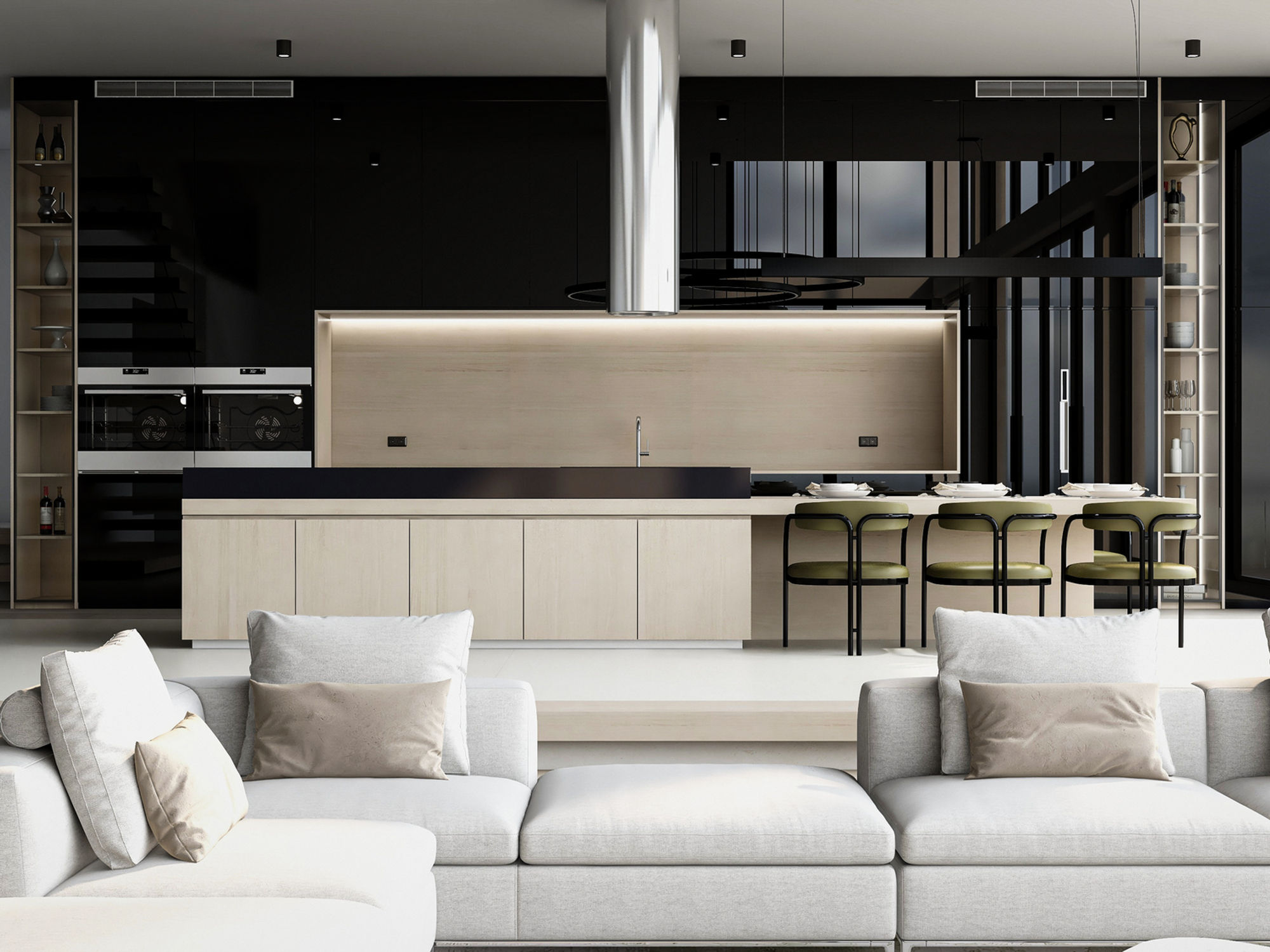
The finish decision is the most consequential single choice in a kitchen program. Cabinet dimensions are determined by the room. Hardware is determined by the construction method. But the finish — the color, the material, the surface quality — is a design decision with no constraints except your own judgment and the light conditions of the room.
It is also the decision that most DC homeowners make last, and often with the least information. The finish library is shown at the showroom in small samples under artificial light. The decision is made quickly, often under time pressure from a fabrication schedule, often without understanding what each finish material actually is, how it performs over ten years, or what it looks like under the specific light conditions of the room it will occupy.
This guide covers the five primary cabinet finish categories Pannello uses in DC kitchen programs, the color families that are performing well in the DC market in 2026, and the guidance for matching a finish to the specific light, proportions, and architectural character of the DC housing types where these kitchens live.
Why the finish decision is harder than it looks
A finish sample in a showroom is approximately 10 by 14 inches, viewed under a combination of LED downlights and daylight from a window. The kitchen it is going into is 200 to 400 square feet, with a specific window orientation, a specific ceiling height, specific countertop and flooring materials, and a specific quality of natural light that changes by season and time of day.
The matte lacquer that reads as warm and calm in the showroom may read as grey and cold in a north-facing Georgetown kitchen. The natural oak veneer that looks like furniture in the showroom may look orange under the warm LED fixtures the client selected for their Bethesda kitchen.
Sampling at full scale — a door panel in the actual room, under the room’s actual lighting, against the actual countertop material — is the only reliable way to confirm a finish decision. Everything short of that is an approximation. This is not a sales point; it is a technical fact about how human color perception works under different light sources and in different spatial contexts.
The five finish categories
Pannello’s finish library covers five categories, each with different properties, cost tiers, and appropriate applications.
Matte lacquer (2K polyurethane)
Matte lacquer is the DC kitchen standard at the custom tier — the finish specified in most Georgetown, Bethesda, and McLean kitchen programs across the price range from $60,000 to $150,000. The material is a two-component polyurethane (2K PU) applied in the shop under controlled conditions, cured to a hard film, and delivered in the full RAL colour palette at sheen levels from 5 GU (dead matte) to 30 GU (soft satin).
The distinction between 2K polyurethane and single-component lacquer matters. Single-component lacquers — the finish used in most semi-custom American cabinet programs — remain slightly soft after curing and are vulnerable to moisture, cleaning chemicals, and contact wear at cabinet edges. 2K polyurethane is harder, more resistant to moisture, does not yellow over time, and holds its sheen consistently over a decade of use. The difference is apparent within two to three years; single-component lacquer on a heavily used kitchen will show edge wear and discoloration at the toe kicks and around sink areas within that time.
Sheen level matters more than colour. A matte finish (15 to 25 GU) absorbs ambient light rather than reflecting it, which means surface variation — minor dings, fingerprints, subtle application texture — reads less prominently. A satin finish (35 to 45 GU) adds warmth and depth to the colour but shows fingerprints and surface marks more clearly. In kitchens with children or heavy daily use, the lower-sheen specification is the more practical choice regardless of aesthetic preference.
The RAL system gives Pannello’s matte lacquer programs an essentially unlimited colour palette — any RAL code can be specified, as well as Pantone-matched colours and custom mixes. In practice, most DC kitchen programs land in one of the colour families described later in this guide. The availability of the full palette is significant for clients who have a specific colour in mind — a particular sage from a house they saw in a magazine, an exact warm white that matches the plaster tone of their Georgetown dining room — but most clients benefit from working within the established families rather than chasing a specific code.
Fenix NTM
Fenix NTM (Nano Tech Matt) is an ultra-matte laminate surface manufactured by Arpa Industriale in Italy. It is applied to the door substrate in a controlled factory environment, producing a surface that is harder and more uniform than spray-applied lacquer and has properties that lacquer cannot match: it is self-healing under light heat (a thumbnail scratch on Fenix can be rubbed out with a warm cloth), fingerprint-resistant to a degree that no lacquer achieves, and extremely resistant to cleaning chemicals.
Fenix reads as darker and more saturated than the same colour in matte lacquer — the nano-structure of the surface traps light rather than reflecting it, producing a depth that many designers describe as “velvety.” The colour range is more limited than lacquer (Fenix is sold in a catalogue of specific colours, not a custom-mixed palette), but the available range covers the primary DC kitchen colour families: whites, greys, warm neutrals, greens, blues, and blacks.
Where Fenix is the correct specification: bathroom vanities (Fenix performs better than lacquer in the humidity cycling of a DC bathroom), kitchen islands and lower cabinets where contact and cleaning are most frequent, and any program where fingerprint resistance is a primary concern. In a McLean kitchen with six people using it daily, Fenix on the lower cabinets and a matching lacquer on the uppers is a common hybrid specification.
Fenix and heat: Fenix is resistant to brief contact heat but not to sustained high temperatures. A hot pan placed directly on a Fenix surface will mark it. This is relevant for surfaces near the cooktop or any application where hot items may be set on the cabinet face.
Wood veneer
Wood veneer cabinet fronts are the highest-warmth finish in the Pannello program — and the one that requires the most careful specification in the DC market. The veneer is a thin slice of real wood (typically 0.5mm to 0.6mm) applied to an 18mm substrate, finished with a clear 2K polyurethane sealer in matte or satin.
Species and cut matter enormously. Rift-cut white oak — the grain pattern produced by slicing perpendicular to the growth rings — produces a linear, consistent vertical grain that reads as contemporary and calm. It suits the architectural vocabulary of frameless slab-door DC kitchen programs. Rotary-cut veneer — the most common cut in American builder-grade programs — produces a broader, more variable grain pattern with cathedral arches that reads as traditional or rustic. The same species (oak) produces a completely different visual result depending on the cut.
Pannello’s primary veneer specification is rift-cut white oak because it is the cut that suits the clean-line frameless programs the DC market specifies. Other available species — walnut, ash, eucalyptus — are used for specific design briefs where the grain character is part of the design intent.
Veneer and humidity: real wood veneer expands and contracts with humidity. In DC’s seasonal humidity cycling, a veneer kitchen without proper moisture-resistant substrate and sealing will show door movement — slight warping or cupping — over time. Pannello’s veneer program uses moisture-resistant substrate throughout and 2K polyurethane sealers that minimize moisture uptake. This does not make veneer appropriate for bathrooms or spaces with sustained high humidity, but it is adequate for climate-controlled DC kitchens.
Matching veneer across a full kitchen program requires ordering all veneer fronts from the same flitch — the consecutive slices from a single log section. Consecutive slices from a flitch have consistent grain direction and color; non-consecutive slices or fronts from different flitches will have visible variation that reads as inconsistent in a long run of cabinets. Pannello matches veneer from a single flitch for full kitchen programs.
Fluted and reeded fronts
Fluted fronts — a door face with vertical channels routed into the surface — are the primary architectural detail option in Pannello’s finish program. Available in lacquer, Fenix, or veneer, a fluted front adds dimension and shadow play to the cabinet face that a flat slab door does not have.
The appropriate application for fluted fronts in DC kitchens is selective rather than total: a fluted island front in a material that contrasts with the perimeter cabinets (fluted oak island, lacquer perimeter), or a section of fluted tall cabinets that frames a cooking niche. A full-kitchen specification of fluted fronts in a Georgetown rowhouse kitchen reads as dense and busy; the same kitchen with flat uppers and fluted lowers reads as considered.
Reeded fronts (narrower, more closely spaced channels) are a finer version of the fluted profile appropriate for programs where a more delicate texture is specified — typically bedroom wardrobes and bathroom vanities rather than kitchen perimeter cabinets, where the heavier fluted profile suits the scale better.
Brushed metal and back-painted glass
Brushed metal fronts — typically brushed aluminum or steel, available in several finishes including satin, champagne, and dark bronze — are specified primarily for kitchen island faces and appliance panels in DC programs. The metal surface adds a material contrast that reads as industrial-modern; it is the correct choice for a program where the overall design vocabulary is harder-edged than the warm neutral palette.
Back-painted glass is a high-gloss option that produces a mirror-like surface in any colour from the RAL palette. It is specified primarily for uppers in programs where maximum visual lightness is required — a narrow galley kitchen in a Dupont Circle condo where reflectivity increases the perceived volume of the room. The practical limitation is fragility: glass fronts are heavier than lacquer panels, more vulnerable to impact, and more expensive to replace when damaged.
Cabinet finish cost by type — Washington DC, 2026
Finish properties comparison
| Finish | Scratch resistance | Humidity | Fingerprints | Repairability | Colour range | Cost tier |
|---|---|---|---|---|---|---|
| Matte lacquer 2K | High | Very good | Low (matte) | Full respray | Unlimited (RAL) | Mid |
| Fenix NTM | Very high | Excellent | Very low | Micro-abrasion | Limited catalogue | Mid–high |
| Rift-cut oak veneer | Medium | Good (sealed) | Low–medium | Difficult | Natural only | High |
| Satin lacquer 2K | Medium | Very good | Medium | Full respray | Unlimited (RAL) | Mid |
| Fluted lacquer | High | Very good | Low | Full respray | Unlimited (RAL) | High |
| Back-painted glass | High | Excellent | High (gloss) | Full panel replacement | Unlimited (RAL) | High |
Colour families in the DC market, 2026
White and off-white
White kitchen cabinets remain the most specified colour family in the DC market in 2026, particularly in Bethesda and McLean colonial programs. The dominance of white is not a trend — it is a function of resale value, room brightness, and the versatility of white as a backdrop for countertop and hardware changes over time.
The important distinction within the white family is warmth. A cool white (RAL 9016, 9003) reads as clean and clinical — appropriate in a McLean contemporary program with grey quartz counters and brushed nickel hardware. A warm white (RAL 9001, 9010, or a custom mix biased toward yellow) reads as softer and more compatible with wood floors, warm stone counters, and the slightly warm light of a Georgetown or Chevy Chase kitchen.
Most DC kitchen programs that specify “white” benefit from a sample comparison against the room’s actual surfaces before committing. The warm whites and cool whites that look similar in a paint chip look meaningfully different on a full run of cabinet doors at scale.
Warm neutrals — greige, linen, putty
The warm neutral family — RAL shades in the 9000s biased toward beige, grey-beige, and warm grey — has been the most significant growth area in DC kitchen programs over the past three years. These colours sit between white and grey without reading as either; they have enough warmth to complement wood floors and natural stone counters, enough neutrality to avoid reading as a colour statement.
In a Georgetown rowhouse kitchen with limited natural light, a warm greige in the RAL 1015 (light ivory) to RAL 7044 (silk grey) range is often the correct specification: warm enough to avoid the cold reading that a cool white can produce in a north-facing room, neutral enough to remain appropriate with any countertop material.
Natural wood and warm veneer
Wood veneer kitchen programs have increased significantly in the DC market since 2022. The rift-cut white oak specification — the dominant veneer choice in Pannello programs — reads as contemporary but warm, a quality that suits both the transitional programs common in Bethesda and Chevy Chase and the more architectural programs in new-construction McLean and Arlington homes.
The wood veneer trend in DC is partly a reaction to the decade-long dominance of painted cabinets: homeowners who renovated in 2012–2018 in all-white or all-grey lacquer are now looking for the warmth and materiality that a painted program cannot provide. An oak veneer kitchen in a Bethesda colonial provides this without reading as rustic or traditional.
Warm veneer — walnut, smoked oak, eucalyptus — is specified in smaller quantities for accent applications: a walnut island in a white lacquer kitchen, a smoked oak pantry tower in a greige perimeter program.
Sage and dusty green
Sage green — the family of muted, grey-toned greens from RAL 6021 (pale green) through RAL 6019 (white green) — has been one of the defining DC kitchen colours of the mid-2020s. It reads as a colour with depth — it is unmistakably green at close range, but reads as a sophisticated neutral in the room — and it pairs naturally with the brass and unlacquered brass hardware that DC designers have been specifying consistently since 2021.
The appropriate application for sage in a DC kitchen depends on the room’s size and light. In a large, light-filled McLean kitchen, sage on all perimeter cabinets and uppers is a confident program. In a smaller Georgetown rowhouse kitchen, sage on the lower cabinets only — with a warm white or greige upper — provides the colour without the weight that a full-room sage reading can produce in a smaller footprint.
Deeper greens — forest, hunter, Farrow and Ball Calke Green territory — are a stronger statement appropriate for kitchens where the homeowner wants the finish to be the design statement. These are less common in DC but are appearing in Georgetown programs where the house’s Federal character supports a stronger colour commitment.
Navy and deep blue
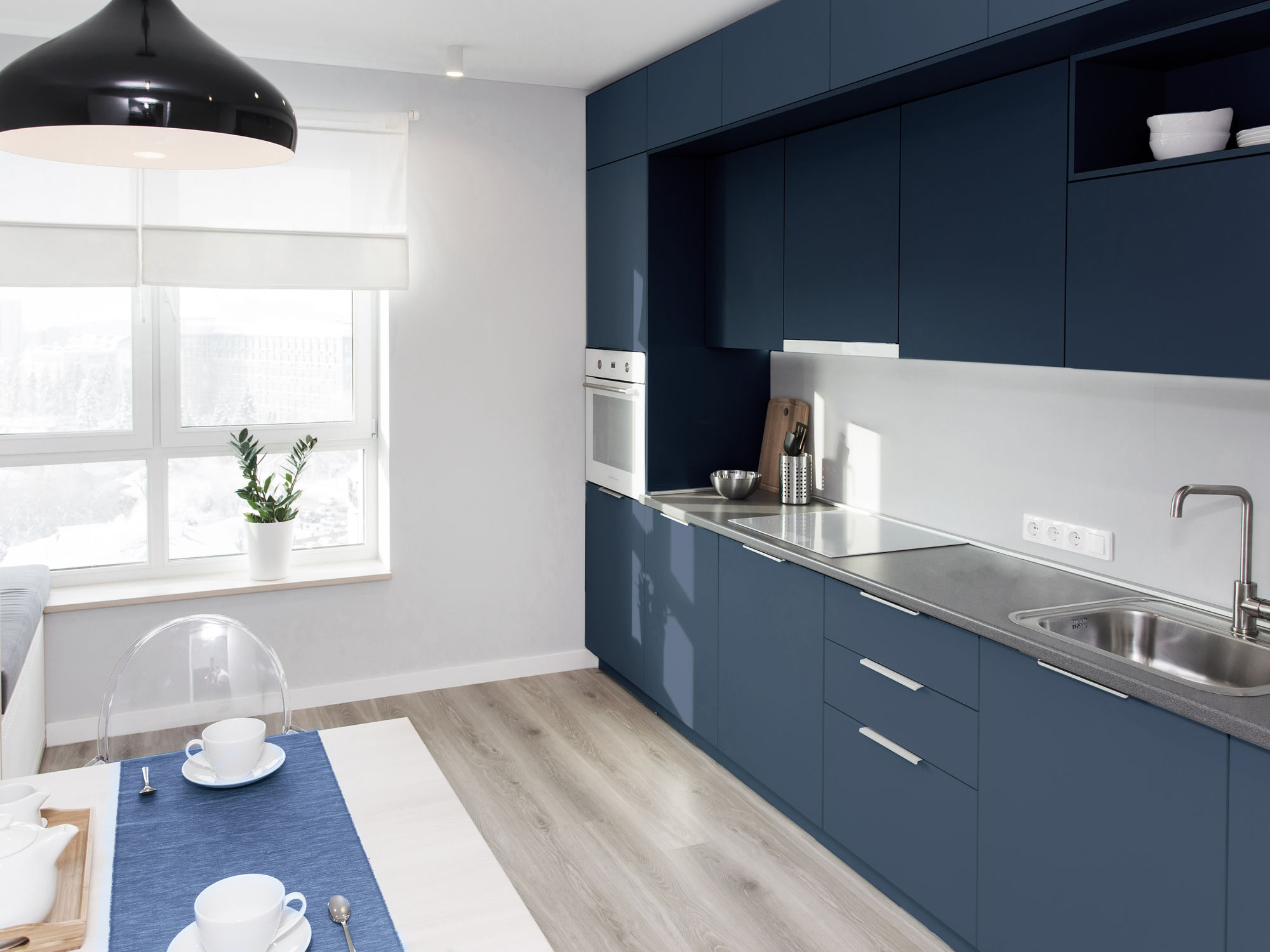
Navy is the second most-specified “colour” (as opposed to neutral) in DC kitchen programs, with strong growth in Bethesda and McLean kitchens where the homeowner wants a colour that reads as traditional but refined. RAL 5011 (steel blue), RAL 5013 (cobalt blue), and custom mixes biased toward black-blue are common specifications.
Navy works well in large kitchens with adequate natural light and white or off-white upper cabinets. A navy lower / white upper two-tone program — the most common application — grounds the room visually without making it feel smaller. In a smaller Dupont Circle condo kitchen, the same navy program can feel heavy; the light balance requires more consideration.
Black and near-black
A full black kitchen — RAL 9005 (jet black) or a near-black custom mix — is the highest-stakes finish decision in the DC market. Done correctly, in a large, well-lit McLean or Great Falls kitchen with stone counters and warm lighting, it reads as architectural and resolved. Done incorrectly, in a small kitchen without adequate light, it reads as oppressive.
The more common DC specification is a near-black rather than a true black: a very dark charcoal, a dark green-black, or a dark blue-black that reads as black in certain lights and reveals its undertone in others. Fenix’s Nero Ingo and Grigio Londra are popular near-black specifications in Pannello’s bathroom vanity and kitchen island programs.
Finish guidance by DC housing type
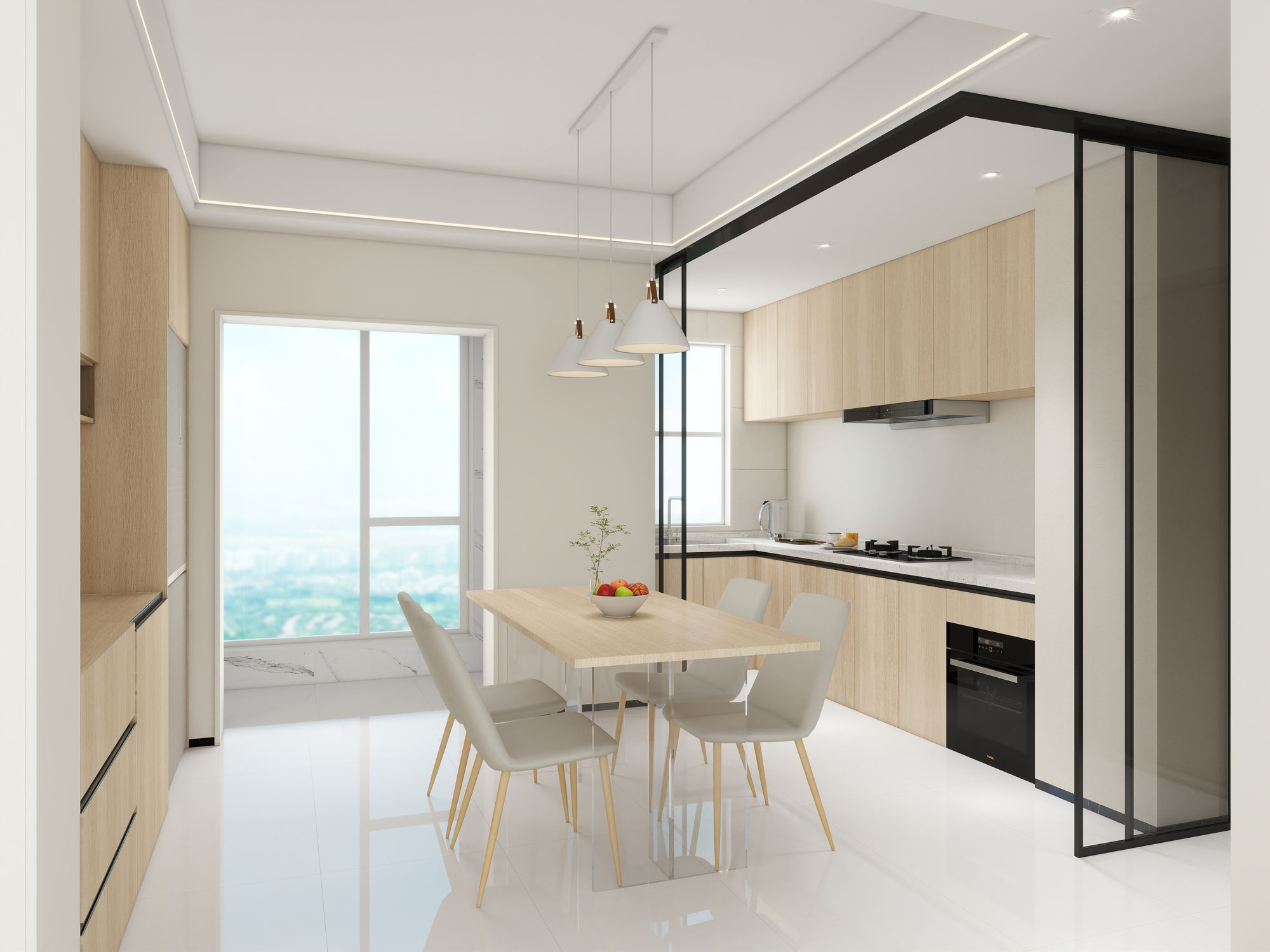
The light quality and proportions of DC housing types are different enough to affect the finish decision meaningfully.
Georgetown and Capitol Hill rowhouses
The typical Georgetown or Capitol Hill kitchen is small (150 to 220 square feet), faces north or east through a limited number of windows, and has 8- to 9-foot ceilings. The walls are plaster, often painted in a warm tone. The floors are typically hardwood, usually in a medium-warm tone.
In this context: warm whites and warm neutrals perform best for perimeter cabinets. A cool white in a north-facing Georgetown kitchen reads grey and institutional. A warm white (RAL 9010 or similar) in the same kitchen reads calm and appropriately architectural.
Wood veneer uppers are not the right specification for small, low-light Georgetown kitchens — the warm wood tone combined with limited light produces an effect that reads as darker than intended. If veneer is desired, limit it to the lower cabinets or the island.
Fluted fronts on the island or a tall pantry cabinet in a Georgetown kitchen add architectural interest without competing with the historic character of the house.
McLean and Great Falls colonials
McLean and Great Falls colonial kitchens are large (250 to 400 square feet), typically south- or west-facing, with abundant natural light through large windows or sliders to the yard. 9- to 10-foot ceilings. Drywall construction. Floors typically in wide-plank hardwood or large-format tile.
In this context: the full colour palette is available. A full-room sage, a navy lower/white upper program, a full rift-cut oak veneer, or a dramatic near-black all perform well with sufficient light. The risk in McLean kitchens is under-specification — a warm white on all cabinets in a kitchen with this much light and scale reads as plain rather than elegant.
The correct programme for most McLean kitchens is two-tone: a colour or veneer on the perimeter lowers, a lighter tone on the uppers, and a contrasting island that anchors the room. This creates the visual layering that makes a large kitchen feel designed rather than just large.
Bethesda and Chevy Chase colonials
Bethesda and Chevy Chase colonial kitchens sit between Georgetown and McLean in size and character — typically 200 to 280 square feet, proportioned rooms with 9-foot ceilings, a mixture of south- and north-facing orientations. The housing stock is primarily transitional in design vocabulary, which means both traditional and contemporary finishes are contextually appropriate.
Warm neutrals, warm whites, and natural wood veneer are the strongest performers in Bethesda and Chevy Chase. These rooms tend to have warm-toned finishes elsewhere — hardwood floors, transitional hardware, neutral counters — and the cabinet finish works best when it is consistent with that warmth rather than providing contrast.
Dupont Circle and West End condos
Condo kitchens in Dupont, West End, and Foggy Bottom are defined by height (often 9 to 11 feet in pre-war buildings) and linear layout (galley or single-wall). The available light varies dramatically by floor and orientation.
In high-floor condos with southern or eastern exposure, the full palette is available. In lower-floor condos with limited light, the finish decision should prioritize reflectivity: a warm white or light greige in satin rather than ultra-matte, upper cabinets in a lighter tone than lowers.
Back-painted glass uppers are one of the rare applications where that finish is genuinely useful — in a narrow galley condo kitchen, the reflectivity of glass uppers increases the perceived volume of the room in a way that no lacquer achieves.
The finish decisions that age poorly
Experience across DC kitchen programs identifies several finish decisions that clients frequently regret after three to five years.
High-gloss lacquer on all cabinets. Gloss finishes amplify every fingerprint, every minor surface variation, and every visual imperfection in the door substrate. In a McLean kitchen used by a family with children, an all-gloss specification becomes a maintenance commitment — the surfaces require wiping after every use to avoid visible marks. Clients who admire a gloss finish in a showroom setting (under flattering lighting, surfaces cleaned before the visit) frequently find the maintenance reality disappointing.
Very dark lower cabinets in a small kitchen. Dark lower cabinets in a Georgetown rowhouse kitchen that is already small and low-light reduce the perceived size of the room further. The effect can be partially mitigated by very light uppers, but the base condition — a small kitchen with dark lower surfaces — is a difficult starting point.
A trend colour without personal conviction. The sage green trend, the navy trend, and the black kitchen trend have each produced DC kitchen programs that the homeowner loved at the time of specification and questioned within two years. A kitchen finish is a ten-to-fifteen-year commitment. Colour decisions made primarily because a finish is appearing frequently in shelter media have a shorter shelf life than decisions made because the homeowner genuinely responds to the material.
The sampling principle
No finish decision should be made from a 10-by-14-inch sample under showroom lighting. The correct process is sampling at full scale in the room — a full-height door panel, leaned against the cabinet run it will occupy, viewed at the time of day when the kitchen is primarily used.
For most DC kitchen programs, Pannello provides a full-height door sample from the selected finish for the client to take home and evaluate in the room for three to five days before confirming the specification. The difference between a finish decision made from a showroom sample and one made from a room evaluation is the difference between a confident decision and a decision made with significant residual uncertainty.
Finish samples from Pannello’s library are available for evaluation in our Georgetown showroom during consultation appointments. Large-format veneer samples, full Fenix colour boards, and matte lacquer door samples in the primary colour families are presented on the wall at the scale where the comparison between options is meaningful.
Frequently asked questions
What is the most popular kitchen cabinet colour in Washington DC in 2026?
White and warm white remain the most specified cabinet colours in DC in 2026, particularly in Bethesda and McLean colonial programs. Within the colour family, the shift over the past five years has been from cool whites (RAL 9016) toward warm whites (RAL 9010, 9001) that perform better in the mixed lighting of a DC kitchen. Among colour families beyond white, sage green and warm greige are the strongest-growing specifications in DC.
What is Fenix NTM and why is it used for kitchen cabinets?
Fenix NTM is an ultra-matte laminate surface manufactured in Italy, applied to the door substrate in a factory process. It is harder than spray-applied lacquer, self-healing under light heat, and produces almost no fingerprint visibility — the nano-structure of the surface prevents oils from leaving visible marks. It is specified in DC kitchen programs primarily for lower cabinets, islands, and bathroom vanities where contact and cleaning frequency are highest. The colour range is more limited than lacquer but covers the primary DC kitchen families.
Should kitchen cabinets be lighter or darker than the countertops?
The most resolved DC kitchen programs have cabinet and countertop tones that are related but differentiated — not matching, and not in strong contrast. A common DC specification: warm white lacquer cabinets with a warm grey or warm beige quartz countertop. The countertop reads slightly darker and more complex than the cabinet, grounding the room without providing a jarring contrast. Strong contrast — very dark cabinets against very light counters, or vice versa — creates drama that works in some design contexts and overwhelms in others.
How long does matte lacquer last on kitchen cabinets?
A properly applied 2K polyurethane matte lacquer in a DC kitchen should last 10 to 15 years before showing significant wear at high-contact areas (cabinet edges, door edges around handles). The primary failure modes are impact chips at cabinet edges and surface wear at the toe kick and the area around the most-used drawers. These can be repaired locally, but a full-kitchen respray for a colour refresh is a more reliable approach when the overall surface shows its age.
Is wood veneer practical for a DC kitchen?
With proper substrate preparation and 2K polyurethane sealing, rift-cut wood veneer performs well in climate-controlled DC kitchens. The key conditions are consistent HVAC management (50% relative humidity year-round prevents seasonal door movement), no direct water contact (veneer is not appropriate for the sink base interior or any surface with direct water exposure), and the understanding that veneer scratches more easily than lacquer and cannot be repainted — a damaged veneer front requires replacement rather than repair.
Can I change my cabinet colour later without replacing the cabinets?
Yes, with limitations. Matte lacquer cabinets can be resprayed in a new colour. The process requires removing all doors and drawer fronts, sanding the existing finish, applying a bonding primer, and spraying the new colour. The cost is approximately 40 to 60% of the original finish cost. Cabinet boxes that are lacquered in place (as in many full-height integrated programs) are more complex to respray but can be done. Fenix NTM and veneer fronts cannot be resprayed — they must be replaced.
To review Pannello’s full finish library in our Georgetown showroom, schedule a design consultation at 2201 Wisconsin Ave NW, or visit our Google Business Profile for completed project photographs and client reviews.
Related reading: Custom kitchen cabinets in Washington DC — 2026 guide · Frameless cabinets in Washington DC — 2026 · Two-tone kitchen cabinets in Washington DC — 2026 · Kitchen cabinet hardware in Washington DC — 2026.