
September 13, 2026
Shaker kitchen cabinets in Washington DC: design guide, costs, and what DC homes are specifying in 2026
A complete guide to shaker kitchen cabinets for Washington DC homes — door profiles, inset vs overlay, painted vs stained, finish options, and what shaker cabinets cost in DC in 2026.
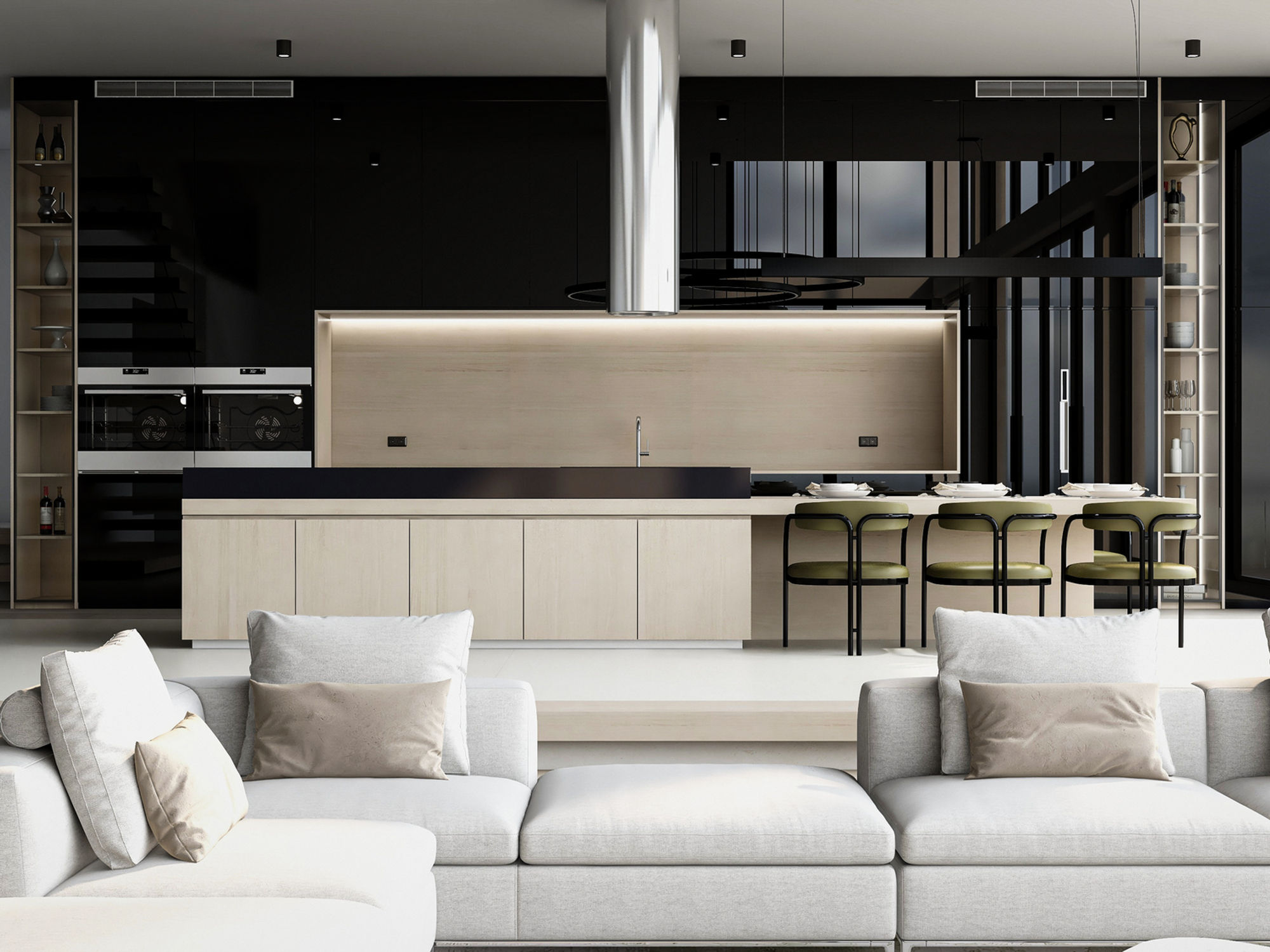
The shaker door profile — a flat recessed panel set inside a square-edged frame — has been the most specified kitchen cabinet door style in the American market for thirty years. In DC, that dominance is more pronounced than in most American cities, because the shaker profile suits the architectural vocabulary of DC’s primary housing types with a precision that no other door style matches.
A Georgetown Federal rowhouse, a Chevy Chase Tudor Revival, a Bethesda colonial — these houses have square-edged trim profiles, flat-panel interior doors, and rectilinear architectural detail. The shaker cabinet door extends that language into the kitchen without requiring a stylistic statement. It is not traditional enough to conflict with a contemporary renovation program, and not so minimal that it reads as cold in a pre-war house with plaster walls and hardwood floors.
But the shaker style is not a single thing. Within the category there are meaningful variations — inset versus overlay construction, frame width, profile depth, material, paint versus stain — that produce results ranging from builder-grade standard to high-end architectural. This guide covers what those variations are, which ones suit DC housing types, and what shaker kitchen cabinets cost across the quality tiers available in the DC market in 2026.
What makes a door “shaker”
The shaker style originated with the Shaker religious communities of nineteenth-century New England, whose design philosophy emphasized functional simplicity and the elimination of ornament. The cabinet door they developed — five pieces of wood (top rail, bottom rail, two stiles, one center panel) joined to form a frame around a recessed flat panel — became the dominant American cabinet door style of the twentieth century precisely because it is so adaptable.
The shaker profile is defined by two elements: the recessed flat center panel, and the square-edged frame with no decorative routing or molding. Everything else — the width of the stiles and rails, the depth of the reveal (the recess of the center panel), the material, the finish — is variable and determines the character of the door.
Stile and rail width is the most significant design variable after the panel itself. A narrow stile (1.5 to 2 inches) produces a contemporary shaker reading — the frame recedes and the door reads as almost flat from a distance. A wider stile (2.5 to 3.5 inches) produces a more traditional reading — the frame is visually present and the door reads as classic American rather than contemporary European. In DC, the standard Pannello shaker specification uses a 2-inch stile, which sits at the boundary between the two readings and suits both transitional and contemporary programs.
Panel reveal — the depth at which the center panel sits below the frame — ranges from a shallow 3/16 inch (nearly flush, a contemporary reading) to a deeper 3/8 inch (more shadow, more traditional). The reveal is typically determined by the door manufacturer; the European MDF door programs that Pannello uses produce a consistent 5mm reveal that reads as contemporary but not aggressively minimal.
Material determines the price tier and visual character more than any other variable. MDF (medium-density fiberboard) shaker doors are the DC kitchen standard for painted programs — they are dimensionally stable, take paint without telegraphing grain, and produce a flat, smooth surface at the frame-to-panel joint. Solid wood shaker doors are used for stained programs; the grain reads as part of the design intent.
Inset vs overlay: the construction decision that defines the kitchen
Before the door profile, the construction method — whether the door sits inside the cabinet face frame (inset) or overlaps it (overlay) — determines the look and cost of the shaker kitchen more than any other single decision.
Full overlay is the contemporary European standard and the Pannello default for frameless cabinet programs. The door covers the full face of the cabinet box, with only a small gap (typically 3mm) between adjacent doors. Viewed straight on, a full overlay shaker kitchen reads as an almost continuous surface of door panels — the shaker frame detail is visible, but the gaps between panels are minimal. Full overlay is appropriate for clean-line contemporary programs, frameless cabinet construction, and any kitchen where the priority is visual calm and continuity.
Inset construction places the door inside the face frame, so that the door face is flush with the frame surface. This produces a more furniture-like appearance — you see the frame and the door panel at the same plane — and is the traditional American cabinetry standard. Inset construction is more expensive (the door-to-opening tolerance is tighter, requiring more precise fitting), produces visible frame lines between panels, and suits the architectural vocabulary of pre-war DC houses more directly than full overlay. A Georgetown rowhouse kitchen with inset shaker doors, unlacquered brass hardware, and a warm white finish reads as historically informed without being period reproduction.
Partial overlay — the door overlaps the frame by a smaller amount than full overlay — is the builder-grade standard used in stock and semi-custom American cabinet programs. The partial overlap exposes a wider face frame than full overlay and produces the “standard American kitchen” reading that most DC renovations are moving away from.
In DC’s custom kitchen market, the choice is typically between full overlay for contemporary and transitional programs and inset for more traditional and historically influenced programs. Inset adds 20 to 30% to the cabinet cost due to the tighter fabrication tolerances required.
The five shaker variants in DC kitchen programs
1. Standard full-overlay painted shaker (MDF door)
The most specified shaker variant in DC, used in transitional and contemporary programs from Georgetown to McLean. An MDF door in a 2K polyurethane matte lacquer, full overlay, on a frameless carcass. The visual result is clean, the finish is durable, and the color range is unlimited (full RAL palette). This is the baseline Pannello kitchen specification.
2. Inset painted shaker (MDF or solid poplar)
Used in programs where the traditional inset construction is part of the design brief — Georgetown Federal renovations, Chevy Chase Colonial Revivals, Capitol Hill Victorian townhouses. The door material is typically MDF for painted programs (dimensional stability) or solid poplar for programs where the face frame and door are intended to read as wood rather than painted surface. The cost premium over full overlay (20 to 30%) is offset by the architectural resolution the inset detail provides in a pre-war DC house.
3. Shaker with beaded face frame
A variation of inset construction in which a small bead (a narrow raised profile) runs around the interior edge of the face frame opening. The bead softens the transition between frame and door and adds a period detail appropriate in Capitol Hill and Georgetown programs where the cabinet vocabulary is explicitly traditional. Less common than standard inset but specified in perhaps 15% of Pannello’s traditional DC kitchen programs.
4. Shaker in wood veneer (stained program)
Used in transitional programs where the warmth of real wood is the design intent. A rift-cut white oak veneer door with a shaker profile, finished in a matte natural clear or a light smoke stain. The shaker profile in oak reads differently from painted MDF — the grain crosses the frame-to-panel joint, adding continuity and warmth. The result sits between contemporary and transitional: warmer than a full-overlay painted program, more architectural than a traditional frame-and-panel door.
5. Slab door with shaker island
A hybrid program increasingly common in DC kitchens: flat slab doors on the perimeter cabinets (contemporary) and a shaker-profile door in a contrasting material or color on the island. The island shaker provides architectural texture and depth that the slab perimeter reads as needing. Common DC specification: matte white slab perimeter, rift-cut oak shaker island.
Shaker kitchen cabinet cost — Washington DC, 2026
Shaker vs other door profiles: a direct comparison
| Door style | Profile | DC housing fit | Period | Cost tier | Best application |
|---|---|---|---|---|---|
| Shaker (flat panel) | Recessed flat panel, square frame | Universal | Any | Mid | Most DC kitchens |
| Slab (flat) | No profile, flat surface | Contemporary | 2010s+ | Mid | Minimal programs |
| Raised panel | Raised center panel, routed frame | Traditional | Pre-2000 | Mid | Colonial revival |
| Beaded inset shaker | Shaker + bead at frame interior | Traditional | Pre-war | High | Georgetown, Capitol Hill |
| Glass-insert | Shaker frame, glass panel | Traditional | Any | High | Upper cabinets, display |
| Cathedral arch | Arched top rail, raised panel | Traditional | Pre-1990s | Mid | Not recommended in DC |
Color and finish for shaker cabinets in DC
The shaker door profile is defined enough to read clearly at any color, but the color interacts with the profile in ways that flat slab doors do not. The recessed panel creates a shadow at its perimeter — a thin dark line where the panel meets the frame — that is more or less visible depending on the finish color and the light conditions of the room.
White and warm white is the most common shaker specification in DC, and with good reason. The shadow line at the panel recess is subtle in white, which means the door reads as textured rather than dramatically patterned. In a McLean kitchen with abundant natural light, warm white shaker doors provide warmth without visual complexity. In a Georgetown rowhouse with limited light, a warm white (RAL 9010 rather than a cool 9016) avoids the clinical reading that a cool white can produce.
Sage green and warm greige on shaker doors produce a more prominent shadow line than white, because the recessed panel reads slightly darker than the frame face. This creates a pleasant layering of tone — the door reads as having depth — but it requires that the color is correct for the room’s light. A DC sage green shaker program that reads beautifully in a south-facing McLean kitchen can read as heavy in a north-facing Georgetown kitchen. Sampling at full scale in the room before committing is the only reliable method.
Natural oak veneer shaker doors produce a shadow line at the panel recess that reads as a design feature rather than a byproduct of the profile. The grain crosses the frame-to-panel joint, which has the effect of softening the visual separation. The result is a door that reads as warmer and more material than a painted shaker at the same quality tier.
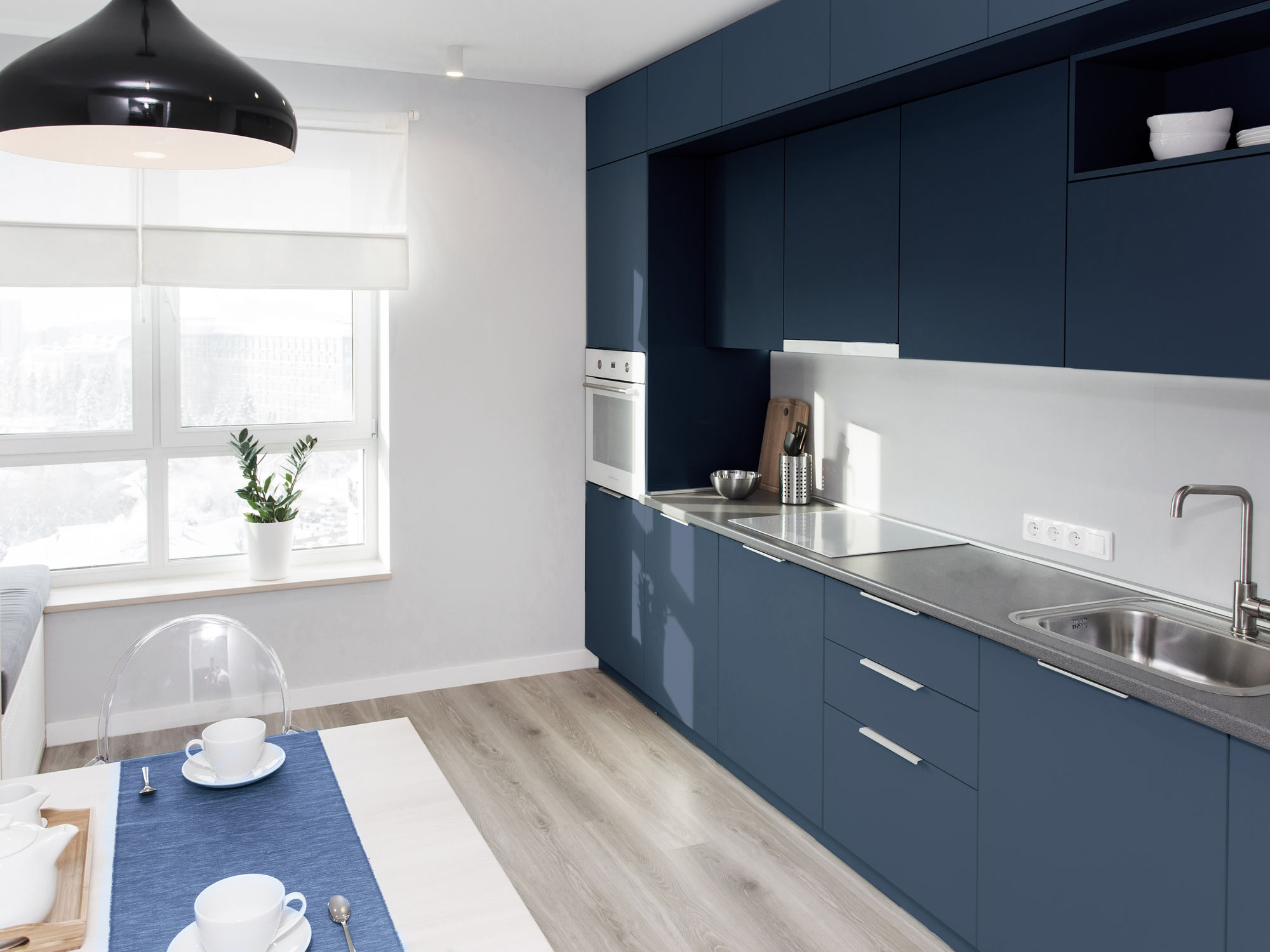
Dark colors (navy, forest green, near-black) on shaker doors require particular attention to scale and light. The shadow line at the panel recess almost disappears in dark finishes — the door approaches a slab reading in very dark shades. The shaker profile is still present under close examination, but its characteristic shadow detail is reduced. For clients who want the visual depth of a dark color, the profile choice matters less than in lighter programs.
Shaker cabinets by DC housing type
Georgetown and Capitol Hill rowhouses
The shaker profile is the correct door choice for Georgetown and Capitol Hill kitchens across almost the full range of program types. The square-edged frame language is directly compatible with the Federal and Victorian trim profiles of these houses — the 2.25-inch door and window casings, the square-edged base moldings, the flat-panel interior doors found in renovated pre-war rowhouses.
In Georgetown Federal houses (1800s construction, typically 3-4 stories, narrow kitchen footprint), the inset shaker specification with unlacquered brass hardware and a warm white or warm greige finish is the most contextually appropriate program. The inset construction adds cost but produces a furniture quality that suits the craftsmanship standard of these houses. Full overlay is also appropriate and produces a more contemporary reading; the distinction is whether the client is renovating toward or away from the house’s period character.
In Capitol Hill Victorians, where the architectural detail is more exuberant — more elaborate moldings, higher ceilings, more complex trim profiles — the beaded inset shaker is worth considering. The bead adds a small period element that contextualizes the cabinet program within the house’s architectural character without tipping into reproduction cabinetry.
Bethesda and Chevy Chase colonials
The transitional program — shaker door, full overlay, warm neutral finish, natural stone counter — is the dominant kitchen specification across Bethesda and Chevy Chase. The shaker door’s adaptability is most apparent here: the same profile can be specified in a rift-cut oak veneer for a program biased toward warmth, in a two-tone program for a program biased toward design, or in a standard painted lacquer for a program biased toward longevity and resale value.
The kitchen sizes in Bethesda and Chevy Chase colonials — typically 200 to 280 square feet — accommodate a full two-tone program (shaker uppers in one color, shaker lowers in another) without the program feeling busy. The most common DC two-tone specification in this housing category: warm white shaker uppers, warm greige or sage green shaker lowers, unlacquered brass hardware.
McLean and Great Falls colonials
The large kitchen footprint typical of McLean and Great Falls new construction — 280 to 400 square feet, 9-foot ceilings, abundant natural light — creates a context where the shaker profile can be pushed in more ambitious directions. A full rift-cut oak shaker program across 30+ linear feet of cabinet frontage reads as architecture in a room of this scale.
The most forward DC specification in McLean kitchens is the hybrid program: flat slab perimeter in a dark or mid-tone color, full-overlay shaker island in oak veneer. The island provides the tactile warmth and profile interest that a slab perimeter cannot, and its position as an isolated element means the shaker detail reads as considered rather than default.
Dupont Circle and West End condos
Condo kitchens in Dupont and West End are typically galley or L-shaped, with limited square footage. In these kitchens the shaker profile can read as busy if the frame width is generous — a 2.5-inch stile on a 12-inch upper cabinet door does not leave much space for the center panel. The standard Pannello specification for condo shaker programs uses a narrower stile (1.75 inches) that maintains the shaker reading without overwhelming the door with frame.
A common Dupont program: full-overlay shaker in warm white on a galley kitchen with a single run of uppers and lowers, stone counter, and concealed LED lighting under the uppers. The shaker detail provides interest in a program that is otherwise defined by space constraints.
Hardware for DC shaker kitchens
Hardware selection on a shaker kitchen has more visual impact than on most other door styles because the recessed panel focuses attention on the door face. The hardware sits at the center of a composition — frame, panel, hardware — and its character affects the overall reading of the program.
Unlacquered brass is the dominant hardware finish in DC shaker kitchens, particularly in Georgetown, Chevy Chase, and Bethesda programs. The warm metal tone complements the shaker profile’s shadow line and reads as refined rather than period-specific. Unlacquered brass patinas over time, which is a feature in programs where the design intent is warmth and character, and a concern in programs where a consistent appearance is required.
Matte black is the DC condo and contemporary hardware specification — it works well with dark or sage green shaker programs and adds edge to a program that might otherwise read as soft. In a McLean kitchen, matte black hardware on a full-overlay shaker in a warm neutral reads as more forward than unlacquered brass.
Satin nickel is the most neutral hardware choice — it reads as transitional rather than a statement, and suits programs where the homeowner is not yet committed to a specific design direction. It is also the most common builder-grade hardware specification, which is a reason some DC designers avoid it in custom programs where the design intent is to read as custom rather than standard.
Bar pulls vs knobs: A single bar pull (horizontal, 5 to 8 inches) on shaker drawer fronts is a clean, contemporary reading that suits the profile. A round knob on a shaker door reads as more traditional. The mixed program — knobs on doors, pulls on drawers — is the DC standard for transitional programs.
What shaker kitchen cabinets cost in Washington DC in 2026
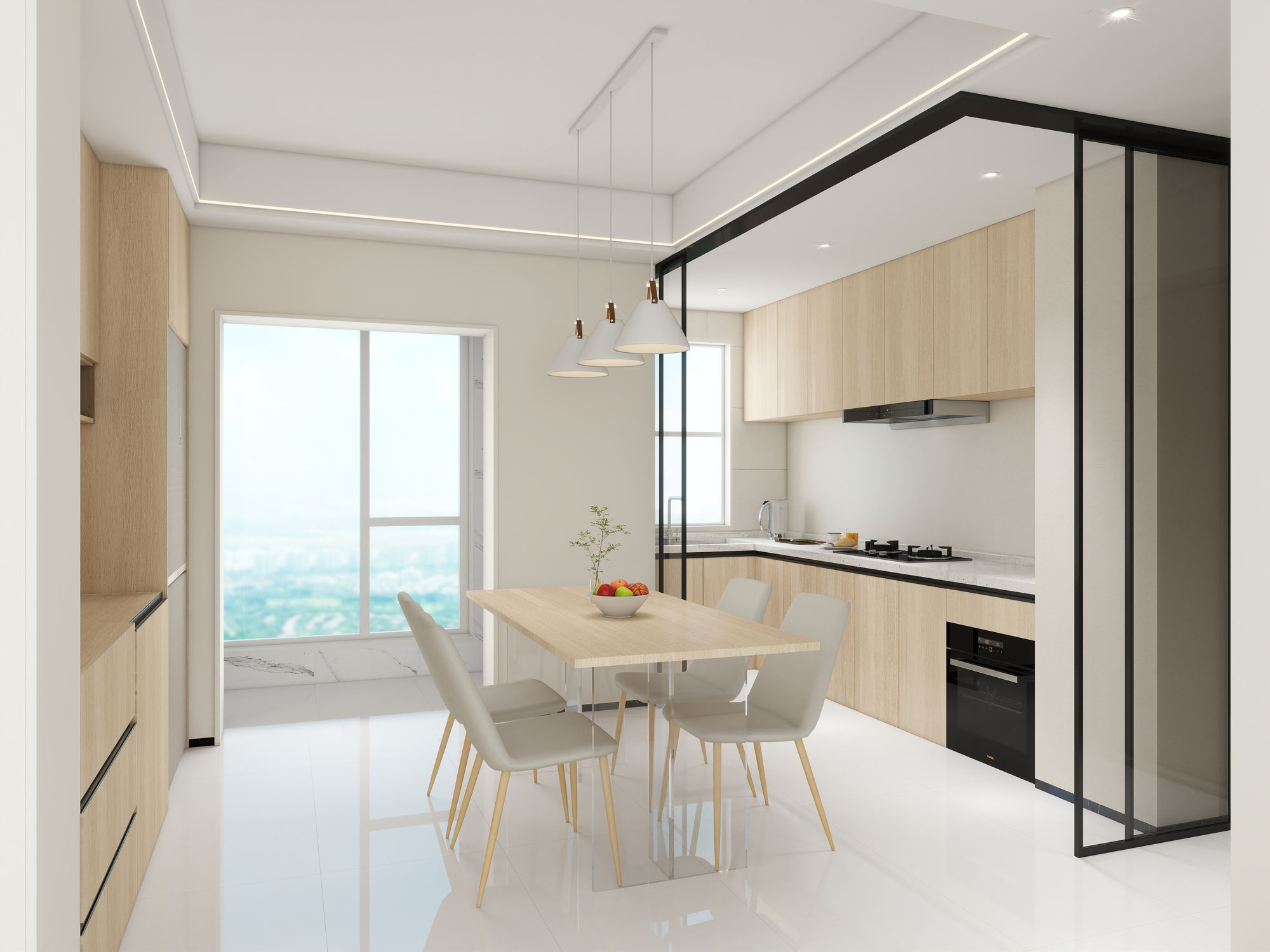
Custom shaker kitchen cabinet cost in DC is composed of door material and finish, carcass construction, installation, and any additional program elements (island, integrated appliances, lighting). The ranges below cover cabinet frontage (doors and drawer fronts) and installation; countertops are priced separately.
A standard full-overlay painted MDF shaker program in a DC kitchen of 20 linear feet — the typical Georgetown or Chevy Chase kitchen — runs $9,000 to $14,000 for doors and installation, before countertops. An inset shaker program of the same size runs $12,000 to $18,000. A full rift-cut oak shaker program runs $14,000 to $20,000.
The full program — cabinets, countertops, and installation — for a 20-linear-foot shaker kitchen in DC runs $40,000 to $80,000 depending on finish tier, countertop material, and program complexity. A McLean kitchen of 30+ linear feet with a large island runs $65,000 to $120,000. These figures are consistent with what Pannello sees in DC projects in 2026.
Pannello’s custom kitchen cabinet service covers the full program from design to installation — including material samples at full scale, shop drawings, and a fixed quote based on the measured room rather than a linear-foot estimate.
The shaker decisions that age well
Experience across DC programs identifies the shaker decisions that produce results the homeowner is still pleased with five and ten years after installation.
A narrower stile reads as more contemporary and ages better in DC. The wide-stile shaker (2.5+ inch) produces a traditional reading that looks appropriate in 2026 but may read as dated in the next design cycle. The 1.75 to 2-inch stile produces a reading that is contextually appropriate and design-neutral.
Inset construction ages better than it costs. The additional cost of inset construction (20 to 30% over full overlay) produces a quality of furniture-making that is visible and appreciated for the life of the kitchen. Full overlay is the more economical specification; inset is the more durable design investment.
Matte lacquer ages better than satin. A 15 to 25 GU matte finish shows fingerprints and surface marks significantly less than a 35 to 45 GU satin in a kitchen that is used daily. The initial appearance of satin is warmer; the five-year appearance of matte is more consistent.
Hardware that is too small reads as cost-cutting. A 3-inch bar pull on a 24-inch shaker drawer front reads as proportionally insufficient. The correct pull length for shaker drawers in DC kitchens is 6 to 8 inches for 18- to 24-inch drawers, and 10 to 12 inches for 24- to 36-inch drawers.
Frequently asked questions
Are shaker cabinets good for Washington DC homes?
Yes — the shaker profile is the most contextually appropriate door style for DC’s primary housing types. The square-edged frame suits the Federal, Victorian, Colonial Revival, and contemporary trim vocabularies found across Georgetown, Capitol Hill, Chevy Chase, Bethesda, and McLean. It is one of the few door profiles that reads correctly in both a pre-war rowhouse and a new-construction colonial without requiring a design concession in either direction.
What is the difference between inset and overlay shaker cabinets?
Inset shaker doors are mounted inside the cabinet face frame, so the door face is flush with the frame. Overlay shaker doors overlap the face frame — in full overlay, the door covers almost the entire frame, leaving only a small gap between adjacent doors. Inset construction is more expensive (tighter fabrication tolerances), produces a furniture-like appearance with visible frame lines, and suits traditional DC programs. Full overlay is the contemporary standard and the Pannello default for frameless cabinet programs.
How long do shaker kitchen cabinets last in DC?
A properly built and finished shaker kitchen cabinet program — 18mm carcass, 2K polyurethane lacquer on MDF doors, European soft-close hardware — should last 15 to 20 years before showing significant wear at high-contact areas. The practical end of life is typically a design update rather than structural failure. The hardware (Blum, Salice) is rated for 100,000+ cycles and often outlasts the finish decision.
What color shaker cabinets are most popular in Washington DC?
Warm white and off-white remain the most specified shaker cabinet colors in DC, particularly in Bethesda and McLean programs. Within the white family, the shift over recent years has been from cool whites toward warm whites (RAL 9010, 9001) that read better in the mixed lighting of DC kitchens. After white, sage green and warm greige are the strongest-growing color families in the DC shaker market in 2026.
Can shaker cabinets be refinished or repainted?
Painted MDF shaker cabinets can be resprayed in a new color. The process requires removing all doors and drawer fronts, sanding the existing finish, applying a bonding primer, and respraying. The cost is approximately 40 to 60% of the original finish cost. The MDF substrate is stable and accepts the new finish well, so refinishing is a viable option for a program that needs a color update but whose carcasses and hardware are in good condition.
What hardware should I use with shaker cabinets in DC?
Unlacquered brass is the dominant hardware choice in DC shaker kitchens for transitional and traditional programs. Matte black suits contemporary and dark-color programs. The proportional rule — pull length approximately equal to one-third the drawer width — matters more on a shaker door than on a slab, because the frame provides a visual context that makes undersized hardware noticeable.
To see Pannello’s shaker door samples in person — full-height door panels across the finish library, including inset and full-overlay profiles — schedule a design consultation at our Georgetown showroom, or visit our Google Business Profile for completed project photographs.
Related reading: Custom kitchen cabinets in Washington DC — 2026 · Kitchen cabinet finishes in Washington DC · Two-tone kitchen cabinets in Washington DC — 2026 · Kitchen cabinet hardware in Washington DC — 2026 · Frameless cabinets in Washington DC — 2026.