
July 16, 2026
Kitchen and bathroom countertops in Washington DC: quartz, porcelain, and stone (2026)
A complete guide to countertop selection for Washington DC kitchens and bathrooms, engineered quartz, sintered porcelain, marble, quartzite, and granite. What each material costs, how it performs in the DC climate, and how to choose the right surface for your home in 2026.
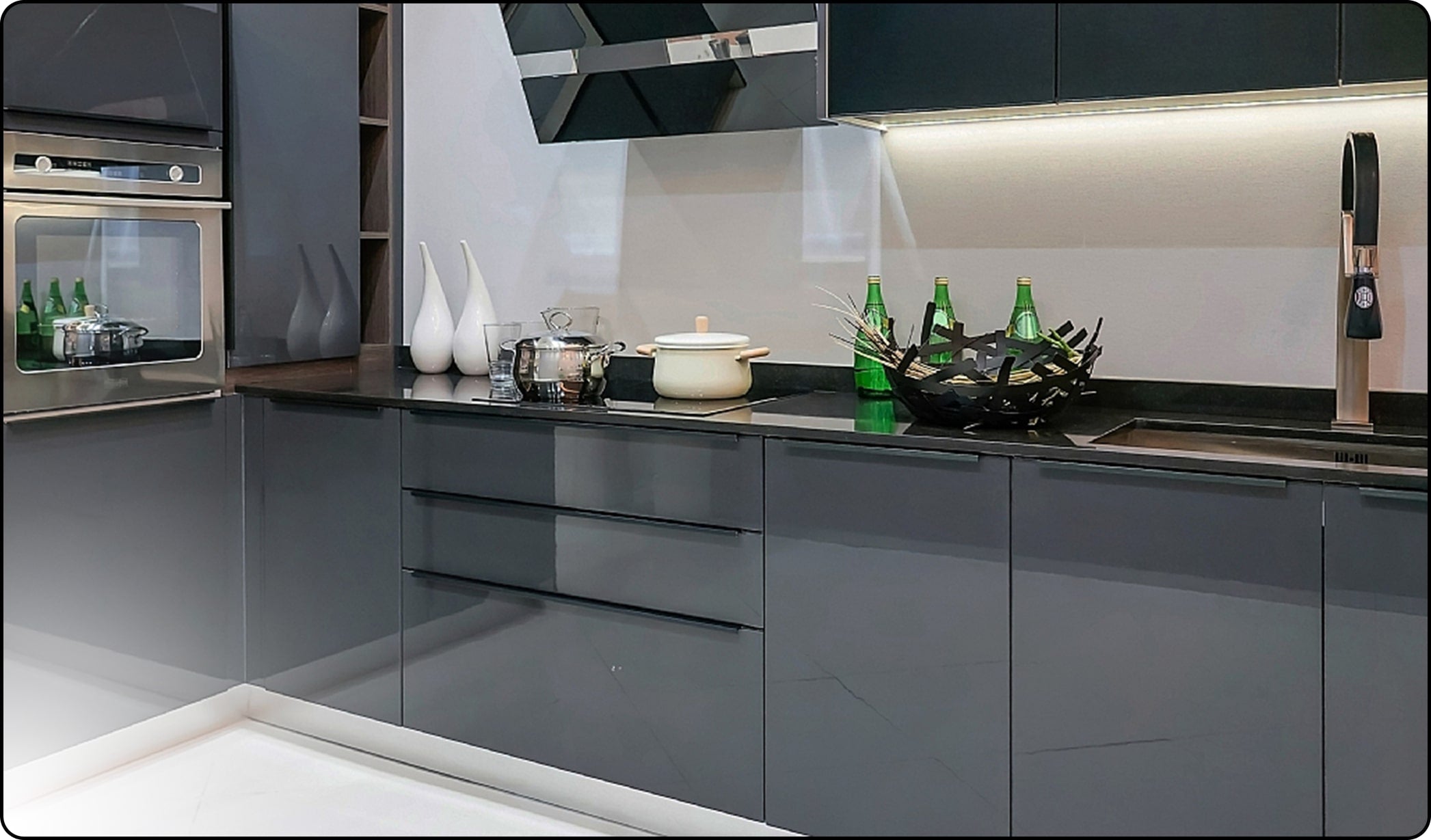
The countertop is the surface you interact with more than any other horizontal plane in your home. In the kitchen it absorbs hot pans, spilled wine, knife nicks, and twenty years of daily use. In the primary bath it holds water, cosmetics, and the residue of morning and evening routines. In a DC rowhouse or McLean colonial at $1.5M and above, the countertop is also a design statement: the first surface a visitor notices, the material that sets the tone for the entire room.
The market for countertop materials in 2026 is more complex than it was a decade ago. Engineered quartz, the dominant material of the 2010s, is now competing seriously with ultra-compact sintered porcelain surfaces (Dekton, Neolith, Atlas Plan) that are harder, more heat-resistant, and available in larger slab formats. Natural stone (marble, quartzite, and granite) has never gone away and in the DC market remains the first-choice specification for a specific type of client: one who wants a genuinely unique surface and understands that uniqueness requires a maintenance commitment.
This guide covers every major countertop material appropriate for DC kitchens and bathrooms, what each costs installed in 2026, how each performs in the specific conditions of DC homes (the humidity cycles, the kitchen use patterns, the aesthetic context) and how to make a selection that you will not regret in ten years.
Why countertop selection is harder than it looks
Most homeowners approach a countertop decision with a single criterion, appearance, and discover the durability, maintenance, and cost implications only after the material is installed. The white marble island that looked perfect in the showroom has etched rings from lemon juice by the end of the first month. The dark granite that seemed sophisticated in the sample is impossible to keep clean in daily use. The quartz that was described as “maintenance-free” has discolored at the edge of the stove where hot pans were set down repeatedly.
The right countertop decision starts with an honest assessment of how the kitchen is actually used, what the maintenance tolerance of the household is, and what the aesthetic goal of the renovation is. A kitchen used by a serious home cook (high heat, acidic ingredients, daily cleaning with strong products) has different requirements from a kitchen that is primarily a social space in a household that orders in most nights. Both are valid programs; they just point to different material specifications.
At Pannello, we walk clients through this assessment in the first consultation before showing a single slab. The material selection that follows from an honest use-case conversation is almost always better than the one that starts with a Pinterest board.
Engineered quartz: the DC market standard
Engineered quartz is the most common countertop specification in DC kitchen renovations at this price point, and for straightforward reasons: it is durable, consistent, non-porous, and available in an enormous range of visual options from pure white to veined marble-look to deep charcoal. Most importantly, it is genuinely low-maintenance: it does not require sealing, it does not etch from acids, and it does not absorb stains.
The material is manufactured by combining approximately 90% ground natural quartz with a polymer resin binder. The result is a surface that is harder than most natural stones, more consistent in color and pattern than any natural material, and engineered to perform in residential kitchens.
What quartz does well
Quartz is the right specification when the following conditions apply: the kitchen is used daily and maintenance is a constraint; the design calls for a consistent, repeatable surface (important when two slabs need to match across a large island and perimeter); the client wants a marble aesthetic without marble’s maintenance requirements; or the budget needs to accommodate both the countertop and the cabinet program without compromise.
Calacatta-look quartz, a white background with bold gray veining, is the most-specified countertop in Pannello’s DC kitchen programs. It reads as marble from across the room, pairs with virtually any cabinet finish, and performs in the daily kitchen environment without the etching and staining that genuine marble requires.
Quartz limitations
Quartz is not heat-resistant in the way sintered stone is. The polymer resin binder can discolor or crack under sustained high heat: a hot pan set directly on quartz can cause permanent damage. Trivets are required at the stove and around the oven landing zone. This is not a theoretical limitation; it is a practical reality in a kitchen where cooking happens.
Quartz also does not perform well in outdoor kitchens or covered terraces. The resin binder is susceptible to UV degradation: prolonged sun exposure causes discoloration. For an exterior countertop application in the DC area, sintered porcelain or quartzite are the correct specifications.
Quartz brands in the DC market
The quality difference between premium and entry-level quartz is real. Pannello specifies primarily from three manufacturers:
Cambria: American-manufactured, backed by a full lifetime warranty, with a pattern library that includes some of the most convincing stone-look surfaces on the market. Cambria’s Brittanicca and Ironsbridge collections are among the most-specified countertop slabs in McLean and Bethesda kitchens in the current cycle.
Silestone: Spanish-manufactured by Cosentino, with a wide color range and a strong track record in the DC market over 20 years. Silestone’s Eternal Calacatta Gold and Yukon collections are consistently specified in high-use family kitchens.
Caesarstone: Israeli-manufactured, with a particularly strong selection of concrete-look and dark surfaces. Caesarstone’s Primordia and Turbine Grey collections work well in kitchens with dark cabinetry or European matte-black hardware.
Sintered porcelain and ultra-compact surfaces: the 2020s specification
Sintered porcelain countertops (sold under brand names including Dekton (Cosentino), Neolith, Atlas Plan, and Laminam) are the fastest-growing category in the DC countertop market and are increasingly displacing quartz in high-specification kitchen programs. The material is manufactured by subjecting a mixture of raw materials (glass, porcelain, and quartz) to extreme heat and pressure: essentially replicating the geological process that creates natural stone, but in 24 hours rather than millions of years.
The result is a surface that is harder than granite, completely non-porous without any sealing requirement, scratch-resistant to the point where a knife blade leaves no mark, and heat-resistant to temperatures that no residential cooking scenario reaches. You can set a cast iron skillet directly from the stove onto a Dekton surface without any risk of damage.
What sintered stone does well
Sintered porcelain is the correct specification for the demanding kitchen: serious home cooks, households with children, kitchens that see daily high-heat cooking. It is also the only non-natural countertop material appropriate for outdoor kitchen applications: UV-stable, frost-resistant, and impervious to moisture.
In the DC market, sintered stone is increasingly specified for primary bath vanities where the countertop is adjacent to a steam shower. The material handles humidity cycling without any degradation, does not absorb cosmetics or cleaning products, and can be specified in very large slab formats that allow a single continuous surface across a double vanity.
The large-format availability of sintered stone is architecturally significant. A Dekton or Atlas Plan slab can be cut to create a full-height backsplash that is continuous with the countertop surface: the same material, the same vein pattern running uninterrupted from the counter to the top of the wall. This is the current specification in the most refined DC kitchen programs and produces a visual result that tile or separate-material backsplash cannot achieve.
Sintered stone limitations
The material is hard: which means it is brittle at the edge. A sharp impact on a thin sintered stone edge can chip it in a way that a quartz edge would not chip. Edge profiles for sintered stone are therefore limited to those that minimize the unsupported edge area: eased, beveled, or straight edges are standard; elaborate ogee or bullnose profiles are not appropriate for the material.
Sintered stone is also more demanding to fabricate and install than quartz. The hardness that makes it scratch-resistant also makes it more difficult to cut and polish, which limits the pool of fabricators who can work with it correctly. Pannello works with fabrication partners who specialize in sintered surfaces and have the correct tooling.
Sintered stone brands
Dekton by Cosentino: the most widely available sintered surface in the DC market, with the broadest color and pattern library. Dekton Sirius (concrete look), Dekton Nilium (white), and the Chromica collection are among the most-specified in current Pannello programs.
Neolith: Spanish-manufactured with strong architecture and design firm specification. The Iron Moss and Estatuario collections are regularly seen in DC design firm-specified kitchens.
Atlas Plan: an Italian sintered surface from Atlas Concorde, with particularly strong stone-look collections. Available in 12mm and 6mm thicknesses for specific applications including lightweight island cladding.
Natural stone: marble, quartzite, and granite
Natural stone countertops (quarried from geological formations, cut into slabs, and installed as a genuinely unique surface) represent a different relationship with the countertop than any engineered material. No two slabs are the same. The material has a geological history that is visible in the veining, the color variation, and the crystalline structure. For a specific type of client, that uniqueness and natural origin is the point.
Natural stone requires a different conversation about maintenance than engineered or sintered surfaces. The question is not whether to maintain it but what level of maintenance is acceptable and whether the material’s behavior in real kitchen use is compatible with the household.
Marble
Marble is calcium carbonate: the same mineral that makes up limestone and chalk. In a countertop environment, this means it reacts to acids: lemon juice, vinegar, wine, tomato, and many cleaning products all etch the surface, leaving a dull mark where the finish was. It also absorbs oils and pigmented liquids if not sealed regularly.
None of this stops architects and designers from specifying marble countertops, and for a reason: the aesthetic is unmatched. A book-matched Calacatta Oro slab (two consecutive slabs from the same quarry block, mirror-imaged), installed across a large island is a singular design statement that no engineered material can replicate. The variation, the gray veining on a cream background, the specific warmth of quarried Italian marble: these qualities are real and they are why marble remains the first-choice specification for clients who prioritize the aesthetic above the maintenance.
In the DC market, Pannello installs marble countertops for clients who have been given an accurate picture of what marble requires and who have made an informed choice. A Bethesda kitchen with Calacatta Borghini marble on the island and perimeter, sealed twice a year, maintained with a pH-neutral cleaner, and used by a household that cooks occasionally: this is a configuration where marble holds up and looks extraordinary. The same kitchen in a household with three children who make lemonade on the counter will look different in five years.
The marble species most frequently specified in DC kitchens: Calacatta Borghini (white background, bold gray veining), Statuario (whiter background, finer veining), Carrara (gray background, subtle veining: the most maintenance-friendly marble because its tonal value is closest to the etching color), and Arabescato (dramatic, medium veining on white).
Quartzite
Quartzite is the most misunderstood material in the countertop market. It is a natural metamorphic stone formed from sandstone under heat and pressure: entirely different from engineered quartz and significantly harder than marble. A genuine quartzite slab will not etch from acids, will not absorb liquids as readily as marble, and has a durability profile closer to granite than to marble.
The confusion comes from two sources. First, some slabs sold as quartzite are actually marble or dolomitic marble: softer materials that behave like marble despite the quartzite label. Testing with a drop of lemon juice on the back of the slab before purchase identifies the genuine article: a true quartzite will not etch. Second, quartzite is still a natural porous stone that requires sealing, even if it is far more forgiving than marble.
For DC clients who want the visual of a white, veined natural stone but with significantly better real-world performance than marble, quartzite is the correct specification. Super White, White Macaubas, and Sea Pearl are the quartzite varieties most frequently installed in Pannello DC kitchen programs.
Granite
Granite was the dominant kitchen countertop material of the 1990s and early 2000s, and its reputation has suffered somewhat from overexposure during that period: particularly the brown and green granite that appeared in contractor-grade renovations across the DC suburbs. The current reality is that granite is an excellent material: genuinely hard, scratch-resistant, heat-tolerant with basic precautions, and, in the right varieties, visually sophisticated.
The granite varieties that work in a current DC design context: Calacatta Macchia Vecchia (white background with large, painterly gray and gold movement: frequently mistaken for a marble), White Fantasy, and the Brazilian quartzite-look granites that have cooler, more architectural patterning than the traditional dark granites of the previous era.
Granite requires sealing annually, is resistant to acids (unlike marble), and is the most forgiving natural stone in daily kitchen use. For a Georgetown rowhouse kitchen that is used heavily and where the client wants natural stone without marble’s maintenance requirements, a well-selected granite or quartzite is the right answer.
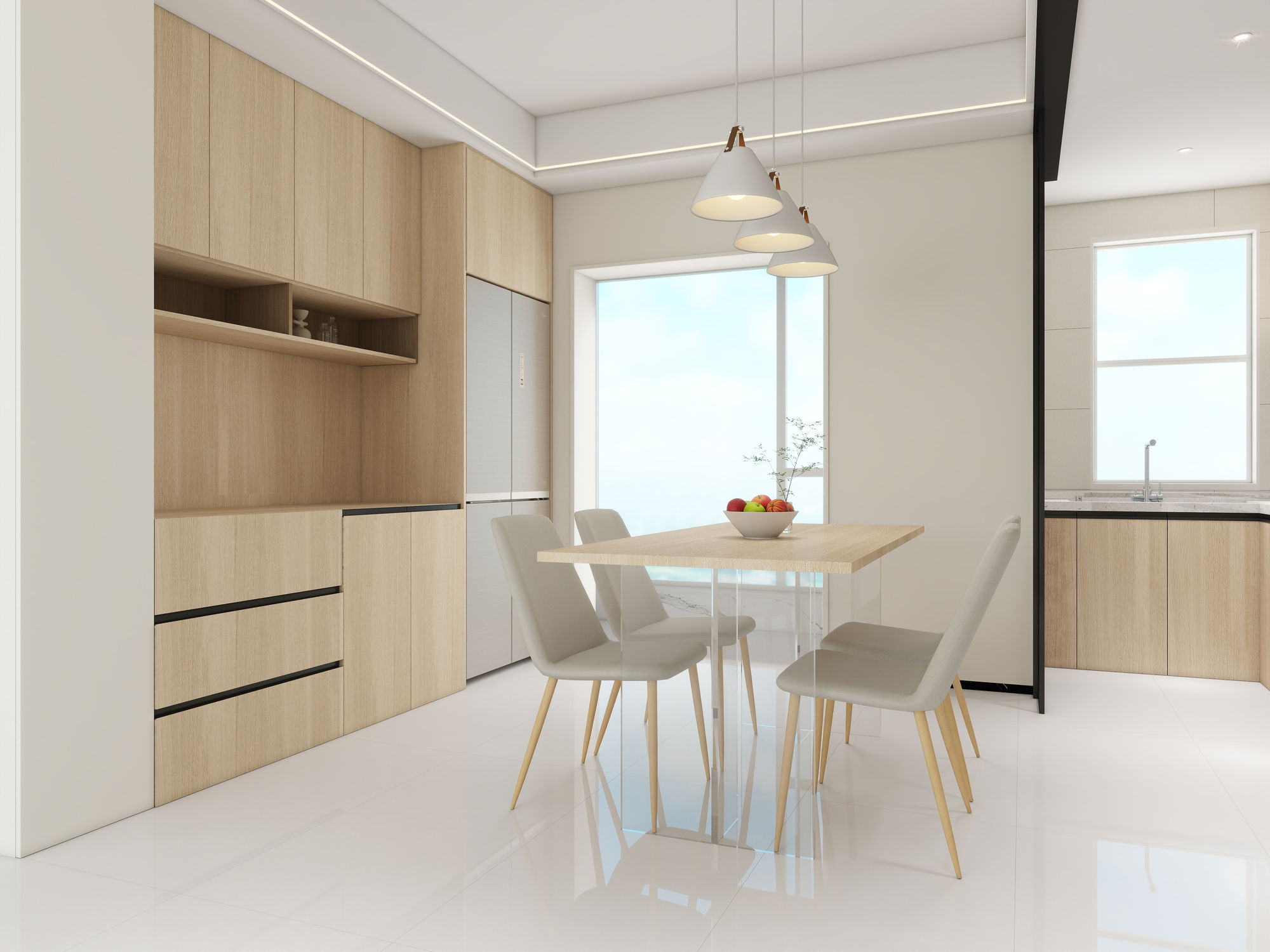
Material comparison: what to choose for your DC home
| Engineered quartz | Sintered porcelain | Marble | Quartzite | Granite | |
|---|---|---|---|---|---|
| Heat resistance | Low, trivets required | Excellent, pan-safe | Moderate | Moderate | Good |
| Scratch resistance | Good | Excellent | Low | Good | Very good |
| Acid/etch resistance | Excellent | Excellent | Poor | Good | Very good |
| Stain resistance | Excellent | Excellent | Low, seal required | Good, seal required | Good, seal required |
| Sealing required | No | No | Yes (2x/year) | Yes (1x/year) | Yes (1x/year) |
| UV resistance | Poor: indoors only | Excellent | Good | Good | Good |
| Large format availability | Good | Excellent | Good | Moderate | Moderate |
| Outdoor use | No | Yes | No | Yes | Yes |
| Visual uniqueness | Low: consistent | Moderate | High | High | Moderate |
| Relative cost | $$ | $$$ | $$$–$$$$ | $$$–$$$$ | $$ |
Thickness: 2cm versus 3cm
Countertop slabs are available in two standard thicknesses: 2cm (approximately ¾ inch) and 3cm (approximately 1¼ inch). The specification choice affects structural performance, edge options, and visual weight.
3cm is the standard specification for most kitchen countertops and is the correct choice for perimeter countertops and islands in primary kitchen programs. At 3cm, the slab is structurally self-supporting across a standard 25-inch overhang without additional substrate, and the edge has enough depth to carry a profile (mitered, beveled, or eased), that reads with visual weight. A 3cm countertop at the edge looks like a substantial surface; a 2cm countertop at the edge looks thin.
2cm is appropriate for bathroom vanity countertops, for wall-hung surfaces that need to minimize weight, and for applications where the slab will be mounted on a substrate that provides structural support. In a primary bath vanity, a 2cm slab on a solid substrate looks correct and is the standard specification.
Waterfall island edges, where the countertop continues vertically down the side of an island to the floor, require a mitered joint between the horizontal and vertical pieces. At 3cm, this mitered joint is clean and substantial. At 2cm, the joint is thinner and may require a laminated edge to achieve the visual weight appropriate to a large island.
Edge profiles
The edge profile is the cross-section of the countertop at the perimeter: what you see when you look at the front or side of the counter. In the DC market in 2026, the dominant specifications are:
Eased (straight with a slightly softened corner): the default for most current kitchen programs. Clean, architectural, minimal. Works with any cabinet finish or hardware selection. The correct specification for sintered porcelain.
Mitered: two pieces of stone meeting at a 45-degree angle to create the appearance of a very thick slab. Most common on island waterfall edges or on countertops where a dramatic visual statement at the perimeter is desired. Requires precision fabrication.
Beveled (1–2cm bevel): a small angled face at the top front corner of the edge. Slightly more traditional than eased, appropriate in kitchens that have a transitional or classic vocabulary.
Ogee, bullnose, and dupont: profiles from an earlier design era. Not currently specified in Pannello programs and not appropriate for the design language in CLAUDE.md.
Backsplash integration: slab versus tile
The backsplash is the vertical surface between the countertop and the upper cabinets or wall. In the current DC kitchen market, the two dominant approaches are a full-height slab continuation and tile.
Full-height slab backsplash: the countertop material continues up the wall, either to the underside of the upper cabinets or to the ceiling. This approach requires precise fabrication: the slab must be cut to exact height, outlets must be cut into the slab, and the installation requires the same fabrication partner who did the countertop. The visual result is architectural: a single uninterrupted surface from counter to wall. This is the most common specification in current Pannello kitchen programs for sintered stone and quartz.
Tile backsplash: a separate material (glazed ceramic, zellige, handmade tile, or a stone mosaic), applied to the wall above the countertop. Tile gives the designer a second material to work with, an opportunity to introduce texture or color that the countertop itself does not provide, and is less expensive to fabricate and install than a slab continuation. In a kitchen with white quartz countertops and white cabinetry, a zellige or unlacquered brass-framed tile can add the visual interest that an all-white surface program needs.
The backsplash decision is made in conjunction with the cabinet and countertop specifications, not independently. Pannello resolves the backsplash at the same design stage as the countertop to ensure the full horizontal surface (counter, back wall, and cabinet face) reads as a coordinated program.
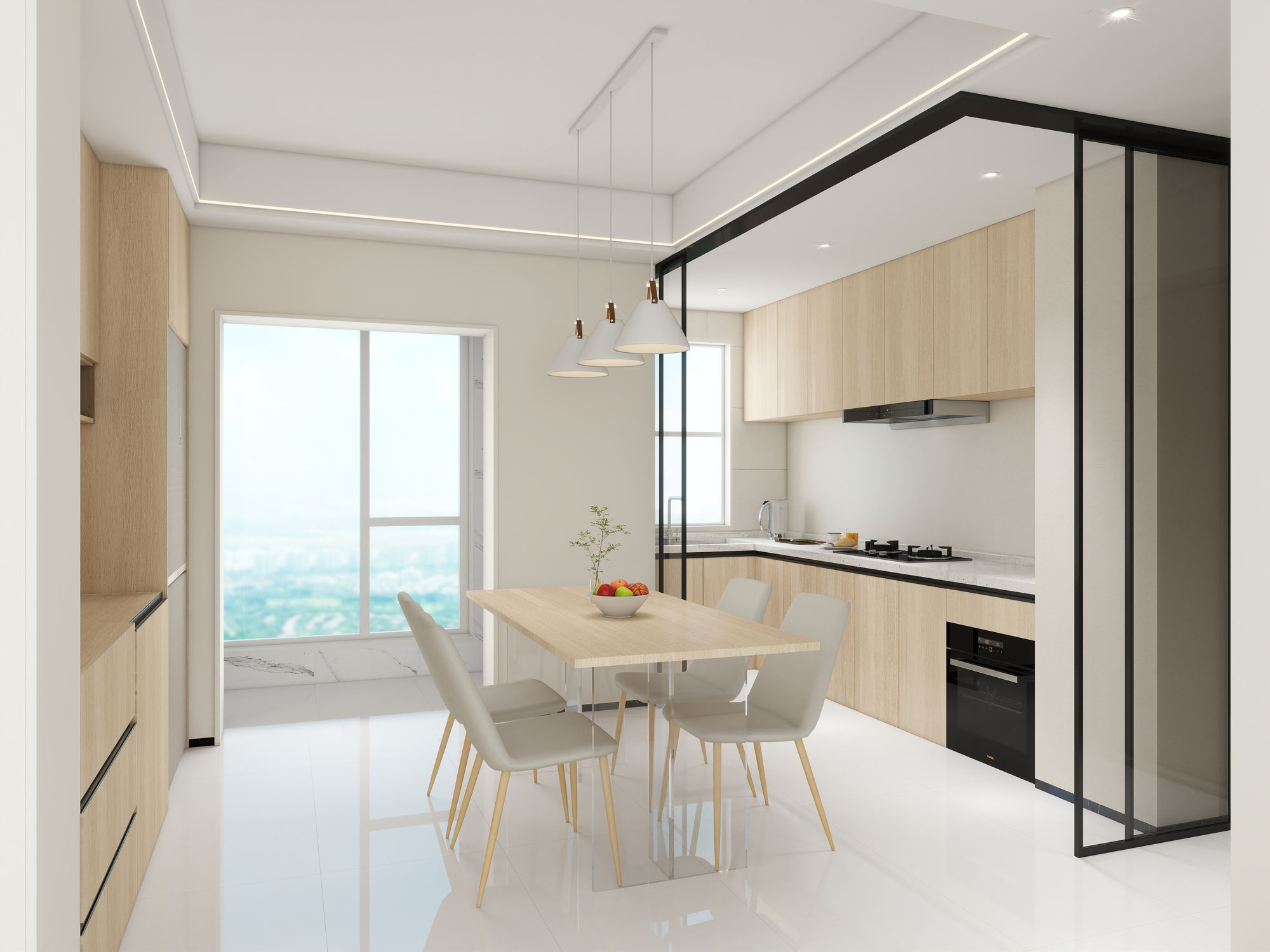
DC housing contexts and what they need
Georgetown rowhouse kitchens
Georgetown rowhouse kitchens present a specific countertop challenge: they are narrow, often 8 to 10 feet wide, and the countertop is the dominant visual surface in a room with limited floor area. The material choice reads at close range and at the full depth of the kitchen simultaneously.
In a Georgetown rowhouse, quartz or quartzite in a white or light gray is the most common countertop specification. The light surface opens the narrow room visually. A full-height slab backsplash, in the same material as the counter, eliminates the visual break between countertop and wall and makes the kitchen feel taller than it is.
For Georgetown kitchens that have been opened to the dining room (a common renovation in these houses), the island countertop is visible from the dining table and needs to work in a longer sightline. A material with visual movement, a quartzite or a strongly veined quartz, rewards the longer view.
McLean and Bethesda kitchen programs
McLean and Bethesda primary kitchen renovations are typically larger programs, an L-shaped or U-shaped kitchen with a significant island, where the countertop surface area is substantial. At 60 to 100 square feet of countertop, the material cost is a meaningful line item in the renovation budget, and the fabrication and installation scope is significant.
The most common countertop specification in current McLean and Bethesda Pannello programs is 3cm Calacatta quartz, either Cambria Brittanicca or Silestone Eternal Calacatta Gold, on the perimeter, with the same material on the island in a waterfall edge configuration. This provides visual consistency across a large kitchen, performs well in a household with high kitchen use, and requires zero maintenance.
For the primary bath in these homes, typically a double vanity in the primary suite, the most common specification is 2cm Calacatta quartz to match the kitchen, or Dekton for a client who wants the steam shower compatibility that sintered stone provides.
Dupont Circle and downtown condos
High-rise condos present a countertop context where the kitchen is typically galley-format or L-shaped with limited countertop area. The cost of a premium material is more manageable at 20 to 35 square feet of countertop, which opens the specification to natural stone options that might be over-budget in a larger kitchen.
Dupont Circle condo kitchen countertops frequently use Carrara marble or White Macaubas quartzite: materials that would require more maintenance discussion in a family home with heavy kitchen use are appropriate in a condo used primarily by two adults who understand the care requirements. The small kitchen means the countertop gets significant visual attention, and the natural stone reads well in that context.
Bathroom vanities across DC
The primary bath vanity countertop is the second-most common countertop project in Pannello’s DC portfolio after the kitchen. The bathroom context is different from the kitchen: no heat (no cooking), no cutting (no knife damage), but high humidity, cosmetic products, and in primary baths with steam showers, significant moisture exposure.
For bathroom vanity countertops in DC, Pannello specifies primarily in two directions: Dekton or Neolith for primary baths with steam showers (the sintered stone handles humidity without any degradation), and quartz or quartzite for standard primary baths. White marble in a bathroom, particularly on a vanity that is not steam-adjacent, is a more defensible specification than white marble in a kitchen, because the acid exposure is lower. Toothpaste is mildly acidic, but it is less aggressive than lemon juice.
What countertops cost in Washington DC (2026)
What pushes costs higher: rare stone sourcing (book-matched slabs from a single block), waterfall island edges (additional fabrication time), full-height slab backsplash (more cuts, outlets, and precision fitting), sintered porcelain on large islands (specialist fabrication surcharge), and removal of existing countertop (typically $300–$600 for a standard kitchen).
Total kitchen countertop cost: for a standard DC kitchen with 40–60 square feet of countertop, expect $3,500–$7,000 for entry quartz, $5,500–$12,000 for premium quartz or sintered stone, and $8,000–$20,000+ for premium natural stone or a large sintered stone kitchen with full-height backsplash.
Case study: O Street Federal Kitchen, Georgetown
The O Street Federal Kitchen is a 2025 Pannello project in a Georgetown rowhouse: a gut renovation of a 1960s kitchen that had been renovated once before and still retained a laminate countertop and stock cabinets. The program included custom kitchen cabinets, new countertops, and a full-height slab backsplash.
The brief: White cabinetry, a surface that reads as natural stone, and zero countertop maintenance. The homeowner is a working professional who uses the kitchen daily but does not have the bandwidth for sealing and spot-treating marble.
The specification: Cambria Brittanicca, a Calacatta-look quartz with bold gray veining on a warm white background, at 3cm on both the perimeter and the island. Waterfall edge on the island in a mitered joint, taking the surface to the floor on the dining room side. Full-height Brittanicca slab backsplash from the perimeter counter to the underside of the upper cabinets, with outlet cutouts concealed in the slab face.
The result: At 8 feet of ceiling height in a Georgetown kitchen, the continuous quartz surface from counter to wall to counter reads as a single horizontal plane that makes the kitchen feel significantly larger than its footprint. The bold veining in the Brittanicca is visible from the adjacent dining room and provides the visual interest that an all-white scheme needs in a small rowhouse kitchen.
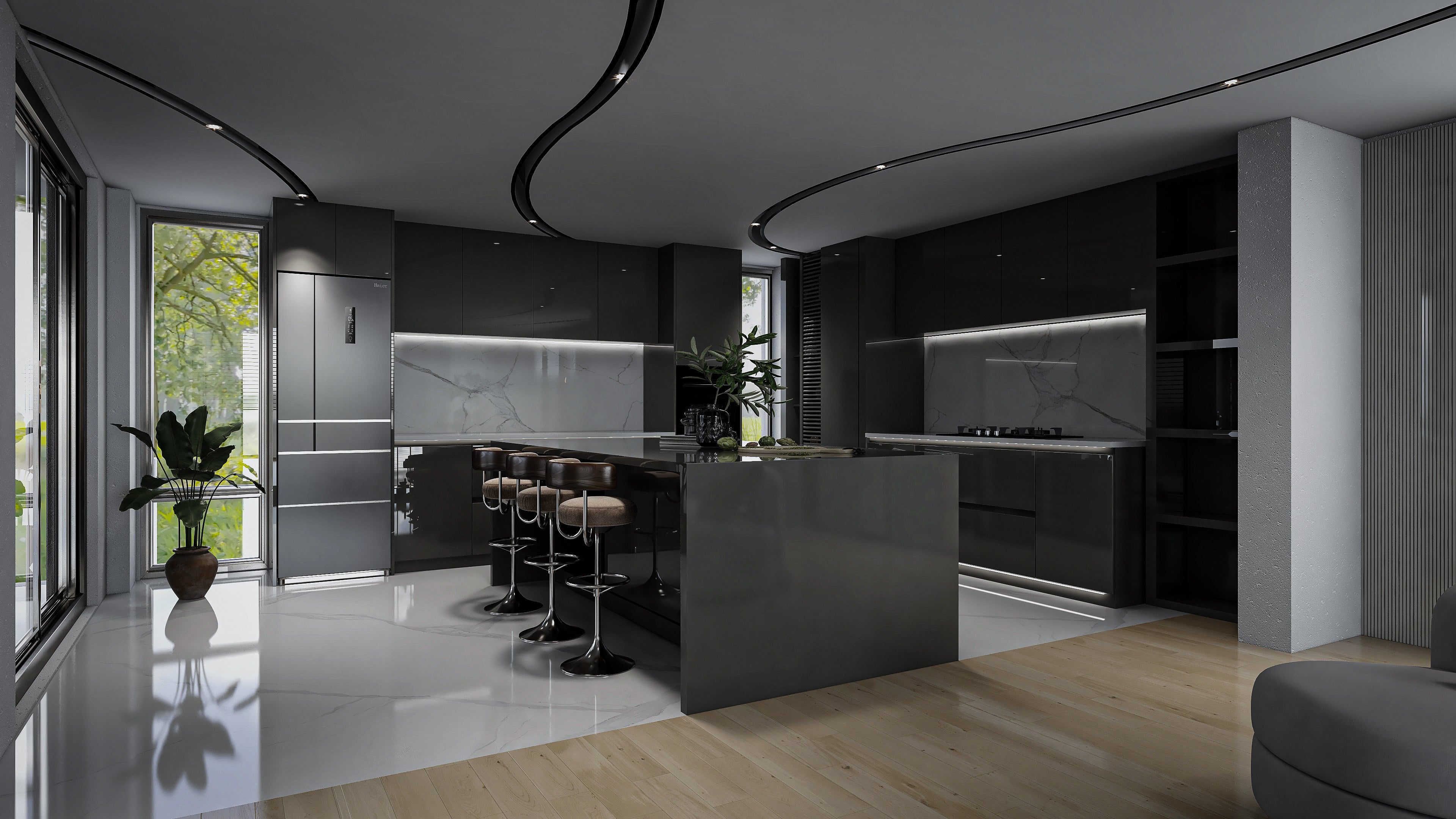
Case study: Connecticut Avenue Condo, Dupont Circle
The Connecticut Avenue Condo is a 2025 project in a pre-war high-rise on Connecticut Avenue: a two-bedroom unit in which the kitchen and primary bath were both renovated as a coordinated program.
The kitchen: A galley kitchen with approximately 28 square feet of countertop: a relatively small surface area that opened the specification to a material that would be over-budget in a larger kitchen. The client specified White Macaubas quartzite: a Brazilian quartzite with a white background, soft gray veining, and slightly crystalline texture that reads differently from quartz in raking light.
The quartzite was sealed before installation and sealed again at 6 months per Pannello’s standard protocol for natural stone. At 28 square feet, the ongoing maintenance commitment is approximately 45 minutes per year: a very manageable exchange for a surface that is genuinely unique and beautiful.
The primary bath: The primary bath vanity is 60 inches wide: a double sink unit in walnut veneer with brass hardware. The countertop is 2cm Dekton Nilium: a clean off-white sintered surface chosen for its steam shower compatibility. The primary bath has a steam shower in the same room, and the humidity cycling it produces made natural stone a maintenance concern. Dekton handles the humidity with no degradation, no sealing requirement, and no staining from the cosmetics and products that accumulate on a vanity surface.
The Pannello countertop process
Countertops at Pannello are coordinated with the cabinet program rather than specified as a separate project. The two products are designed together (cabinet heights, sink placement, and appliance cutouts are resolved before any material is ordered) and installed in the correct sequence.
Material selection: In the showroom, against full-size door samples and actual slab samples. We do not select countertops from 4-inch sample squares; we review full slab photographs and, for natural stone and premium quartz, visit the slab yard together before ordering.
Template: After cabinets are installed, a digital template is taken of the exact countertop dimensions. Every measurement is taken from the installed cabinets, not from drawings: walls in DC rowhouses and condos are rarely perfectly square, and the template accounts for every variation.
Fabrication: 1 to 2 weeks after template for quartz and sintered stone; 2 to 3 weeks for natural stone that requires slab selection and allocation.
Installation: 1 day for a standard kitchen countertop program. Plumbing reconnection, outlet cutout completion, and caulking are included in the Pannello installation scope.
Sealing (natural stone): Pannello applies the first seal coat to all natural stone countertops at installation. We provide the client with the specific sealer used and the recommended reapplication schedule.
Frequently asked questions
What is the most durable countertop material for a Washington DC kitchen?
Sintered porcelain (Dekton, Neolith, Atlas Plan) is the most technically durable countertop material available for DC kitchens: scratch-resistant, acid-resistant, heat-resistant, and UV-stable. For indoor kitchens where heat resistance is the primary concern, a premium engineered quartz from Cambria or Silestone is also an excellent specification with a lower price point.
Does quartz require sealing?
No. Engineered quartz is non-porous and requires no sealing at any point. This is one of its primary advantages over natural stone. Clean with mild soap and water; avoid harsh abrasive cleaners.
Can I put a hot pan on a quartz countertop?
No. The polymer resin binder in quartz can discolor or crack under sustained high heat. Always use trivets near the stove and at the oven landing zone. Sintered porcelain (Dekton, Neolith) is pan-safe.
What is the difference between quartz and quartzite?
Engineered quartz is a manufactured material: ground quartz particles bound with polymer resin. Quartzite is a natural metamorphic stone formed from sandstone. They look similar in many varieties but behave differently: quartz requires no sealing and is acid-resistant; quartzite requires annual sealing but is a genuinely natural material with unique visual character. Quartzite is also heat-tolerant in ways that quartz is not.
How much does a countertop replacement cost in Washington DC?
Countertop replacement in a DC kitchen runs from $3,500 to $8,000 for a standard kitchen in engineered quartz or entry granite (40–60 sq ft installed), $6,000 to $15,000 for premium quartz or sintered stone, and $10,000 to $25,000 or more for premium natural stone with slab backsplash. Bathroom vanity countertops are smaller and run $800 to $4,000 depending on material and vanity width.
How long does countertop installation take?
Template to installation is 1 to 2 weeks for quartz and sintered stone, 2 to 3 weeks for natural stone. Installation of a kitchen countertop is typically a single day. The kitchen is not usable on installation day; plumbing is reconnected the same day and the kitchen is fully operational the following morning.
Can Pannello coordinate the countertop with a full kitchen renovation?
Yes. Pannello manages the full kitchen program (cabinets, countertops, backsplash, and hardware), as a single coordinated project. The countertop is specified and templated as part of the cabinet installation process, not as a separate project requiring separate coordination. This is the most efficient approach for a full kitchen renovation and produces a better result than working with separate contractors for each component.
To discuss a countertop project in Washington DC: schedule a design consultation at our Georgetown showroom at 2201 Wisconsin Ave NW. We review the room, walk the material samples, and can arrange a slab yard visit for natural stone projects.
Related reading: Custom kitchen cabinets in Washington DC, 2026 guide · Custom bathroom vanities in Washington DC, 2026 guide · Custom closets in Washington DC, 2026 guide.