
July 1, 2026
How much do quartz countertops cost in Bethesda, MD? (2026 guide)
Quartz countertop costs in Bethesda run $85–$150 per square foot installed. Here is how DC-area pricing breaks down by material, thickness, edge profile, and what a real Bethesda kitchen budget looks like in 2026.
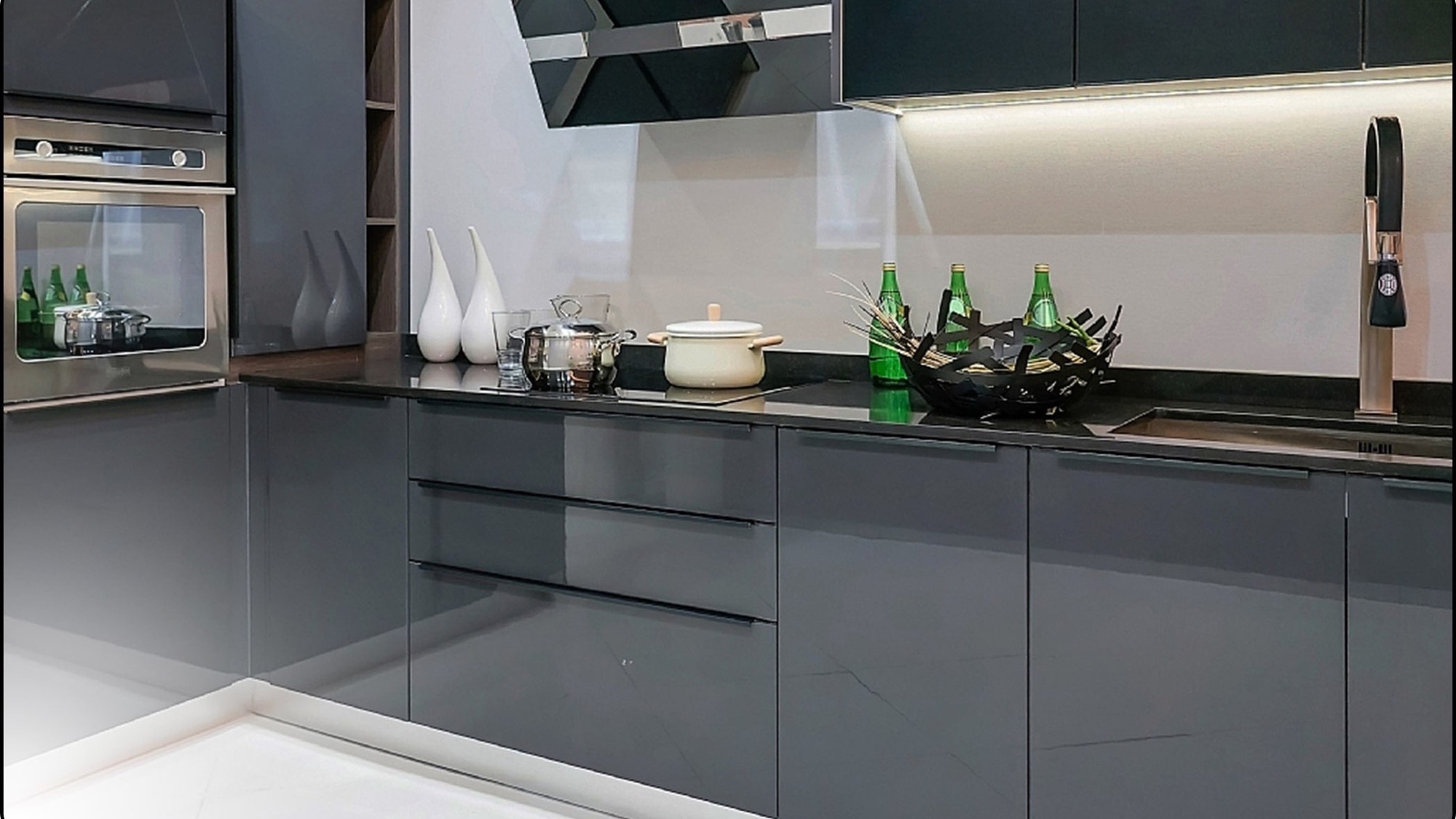
Quartz countertops in Bethesda, MD cost $85 to $150 per square foot installed in 2026. A typical Bethesda new-build or renovation kitchen with 40–50 square feet of counter surface runs $3,400 to $7,500 depending on brand, thickness, and edge profile. That range covers templating, fabrication, delivery, and installation: no separate line items.
What drives the spread: quartz brand tier, slab thickness (2cm vs. 3cm), edge complexity, and how many cutouts the counter requires for sinks and cooktops.
What quartz countertops cost in Bethesda, by brand tier
Not all quartz is the same material. The price difference between a Silestone entry slab and a Cambria premium slab is real, and it shows in color consistency, veining depth, and long-term finish durability.
| Brand | Tier | Installed cost / sq ft | Best for |
|---|---|---|---|
| Silestone (Cosentino) | Mid | $90–$115 | Solid colors, matte finishes, high durability |
| Caesarstone | Mid–Premium | $100–$130 | Veined patterns, wide color range |
| Cambria | Premium | $115–$150 | American-made, book-match options |
| Dekton (Cosentino) | Premium (sintered stone) | $120–$165 | Outdoor kitchens, thin waterfall edges |
| Natural quartzite | Natural stone | $130–$200 | Unique veining, requires annual sealing |
| Marble | Natural stone | $110–$190 | Baking surfaces, traditional DC kitchens |
Prices reflect Bethesda/DC-area installed cost including templating, fabrication, delivery, and standard installation. Cutouts (sinks, cooktops) and specialty edges are billed separately.
Cost breakdown for a real Bethesda kitchen
Most Bethesda new-build kitchens that Pannello specifies run 42–55 square feet of counter surface. That typically includes a perimeter run, an island with seating overhang, and occasionally a butler-pantry counter.
Here is what three common Bethesda kitchen budgets actually buy in 2026:
$3,500–$5,000: Mid-tier quartz (Silestone or Caesarstone entry line) in a solid or lightly veined pattern, 3cm thickness, eased edge, one undermount sink cutout. This is the right budget for a perimeter-only Bethesda kitchen without an island.
$5,000–$7,500: Premium quartz (Caesarstone or Cambria), 3cm thickness, mitered waterfall edge on the island, two undermount cutouts. This is the most common Bethesda new-build specification in the $1.2M–$2M home range.
$8,000–$12,000+: Sintered stone (Dekton or Neolith) or book-matched natural quartzite with a thick laminate edge, large island, butler pantry counter, and potentially an outdoor kitchen extension. This is the specification range for McLean and Bethesda estates where the countertop is a primary material statement.
What drives countertop pricing in Bethesda, and what does not
What moves the number up:
- Island with seating overhang (longer run, cantilever consideration)
- Waterfall edge (mitered return requires double the material at the island end)
- Specialty edge profiles beyond a standard eased or 2mm radius
- Book-matched slabs (requires matched slab selection from the same lot)
- Outdoor or semi-outdoor surface (requires sintered stone, not standard quartz)
- Multiple cooktop or sink cutouts
What does not change the price much:
- Color choice within a brand tier (a white Calacatta-pattern Caesarstone costs the same as a gray one)
- Backsplash height under 4 inches (within standard tile work)
- Number of cabinet runs (priced per square foot, not per cabinet)
Why Bethesda kitchens often use quartz over porcelain
Bethesda’s newer construction, the great-room open plans in the Kenwood and Bradley Hills neighborhoods, tends to specify quartz for one reason: color consistency across a long counter run. A Bethesda kitchen with 14 feet of perimeter counter and a 10-foot island needs slabs that match. Quartz from a single production batch matches; natural stone does not.
Sintered stone (Dekton, Neolith) appears in Bethesda kitchens when the design includes an outdoor pass-through or when the interior designer is specifying a very thin waterfall edge: the 12mm mitered detail that reads as floating rather than heavy. For that specific application, sintered stone is the right material. For everything else, quartz countertops are what we specify in Bethesda.
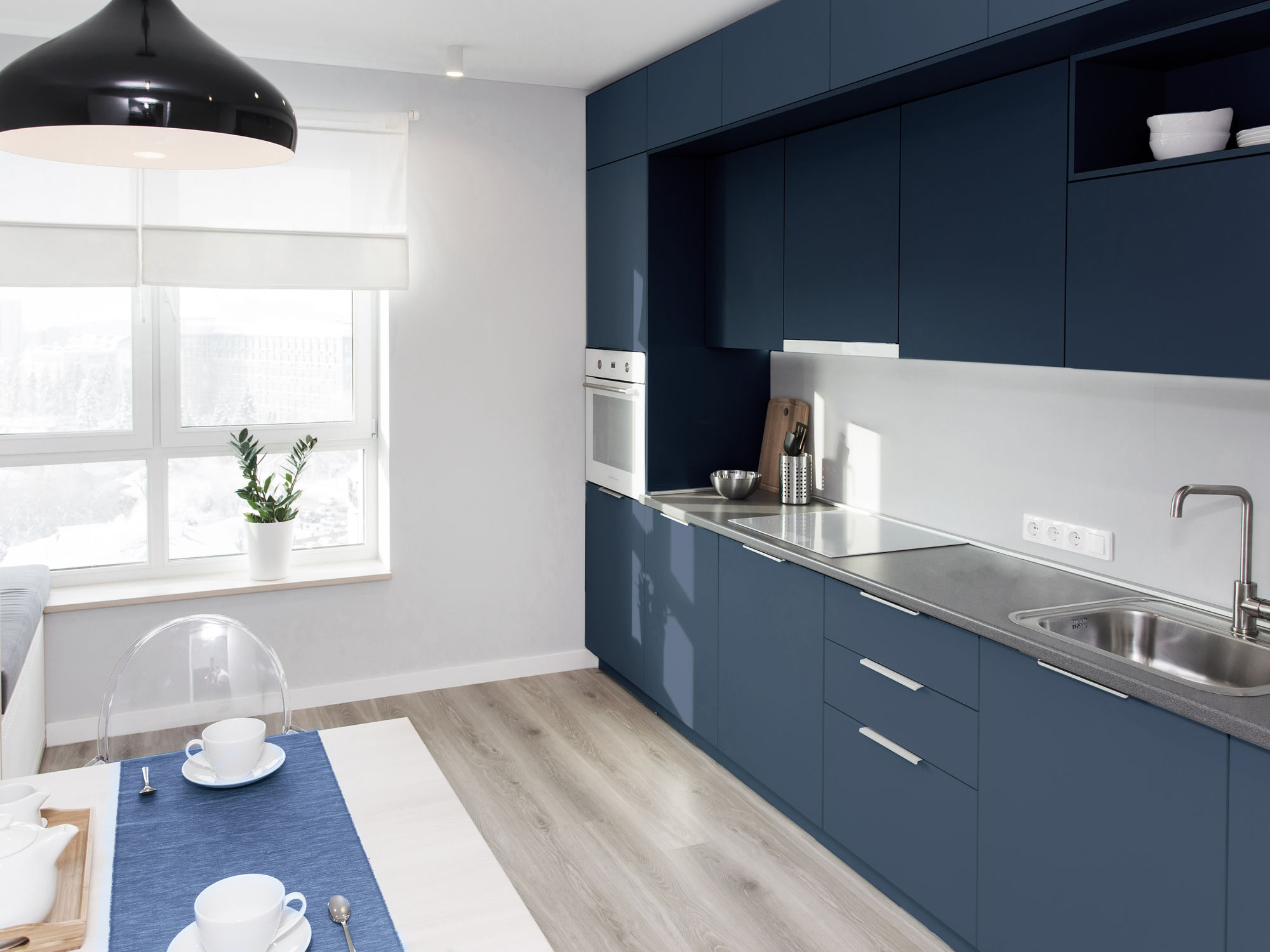
Bethesda great-room project: quartz perimeter counters and island, specified and installed by Pannello as part of a full custom cabinet program.
Edge profiles and what they cost in Bethesda
Edge profile is where countertop specifications get specific: and where the upsells live. The standard included edge on most DC-area fabricators’ quotes is an eased edge (a tight 1–2mm radius on a 90° corner). Every other profile is an upcharge.
Standard (included in most quotes):
- Eased: 90° with a 1–2mm radius. Right for most contemporary DC kitchens.
- Straight: true 90°, no radius. Reads crisp against a flat-front cabinet.
Upcharge profiles ($15–$40 per linear foot extra):
- Mitered waterfall: two panels meeting at 45° at the island end. Requires double material and precision templating.
- Laminated (double-stacked): two slabs bonded to read as 6cm thick. Common in higher-budget Bethesda kitchens where the island is the design focal point.
- Beveled: a 45° cut on the top edge. Less common in contemporary interiors; more common in transitional Bethesda new builds.
The edge detail that reads correctly in a Bethesda new build with flat-front cabinetry and integrated appliances: a 3cm slab with a standard eased edge. The waterfall mitered island edge reads well when the cabinetry is simple and the counter is the material statement. An ogee or bullnose edge reads wrong in any contemporary Bethesda kitchen regardless of material.
Quartz countertops alongside Pannello cabinetry
At Pannello, countertops are specified, templated, and installed as part of the same program as the cabinetry: not as a separate contractor. The counter thickness, edge profile, and cabinet reveal height are resolved in the same design document before anything is fabricated. This matters because the proportion between counter overhang, cabinet door gap, and drawer face determines whether the finished kitchen reads as designed or assembled.
The countertop is templated after the cabinets are installed and level. Fabrication runs 5–7 business days from template. Installation is the final step before the kitchen is complete: typically within our overall 3–5 week lead time.
If you are comparing quartz vs. porcelain countertops and want to see both materials against actual cabinet finishes, that comparison is most useful in person. We pull the relevant slabs in our Georgetown showroom.
For Bethesda homeowners considering a kitchen program, whether a countertop-only replacement or a full cabinet and counter renovation, schedule a design consultation. We will bring the relevant Caesarstone, Silestone, and Cambria samples so you can compare them against your existing finishes or our current cabinet palette.
Frequently asked questions
How much do quartz countertops cost in Bethesda, MD?
Quartz countertops in Bethesda run $85–$150 per square foot installed depending on brand and edge complexity. A 42-square-foot kitchen counter (perimeter without island) runs $3,570–$6,300. Add an island with a standard edge and you are at $5,000–$7,500 for mid-premium quartz.
Is quartz or porcelain better for a Bethesda kitchen?
Quartz is the default for most Bethesda kitchens: consistent color, no sealing, predictable performance. Porcelain (sintered stone) makes sense for outdoor counters, very thin waterfall edges, or book-matched large-format surfaces. For a standard Bethesda great-room kitchen, quartz is the correct specification.
How long does countertop installation take?
From template to installed counter is 5–7 business days. When countertops are part of a Pannello cabinet program, the full kitchen, cabinets and counter, is typically complete within 5–6 weeks from the first consultation.
Which quartz brands do DC designers specify?
Caesarstone, Silestone, and Cambria are the three most common quartz specifications in DC and Bethesda projects. Cambria is the only American-quarried quartz of the three. Silestone has the widest matte finish palette. Caesarstone runs the broadest veined pattern range at mid-to-premium price points.